

Saab receives order to equip the German Navy´s new frigates
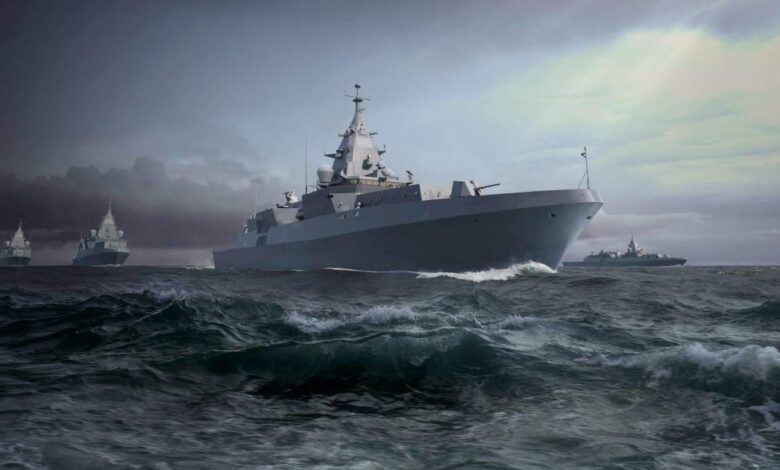
Saab has secured a significant order to provide equipment for the German Navy’s latest frigates, which will be produced in Germany under the leadership of Thyssenkrupp Marine Systems (TKMS) as the prime contractor. This contract includes an option for integrating and equipping additional frigates in the future.
Micael Johansson, CEO and President of Saab, expressed pride in continuing the longstanding relationship with Germany and the Bundeswehr, emphasizing the collaboration with TKMS to enhance the capabilities of the German Navy. He stated, “These deliveries will significantly enhance the Navy’s anti-air, anti-submarine, and anti-surface warfare capabilities.”
The order entails the equipping of frigates with advanced composite superstructures and the 9LV Combat Systems, which includes a Fire Control System alongside a Combat Management System. The systems will be further supported by sophisticated sensors such as the long-range surveillance radar Sea Giraffe 4A Fixed Face, the lightweight multi-mission surveillance radar Sea Giraffe 1X, as well as various passive sensors.
Contact:
Mattias Rådström
Head of media relations
+46 (0)734 180 018
presscentre@saabgroup.com
Saab is a leading defence and security company dedicated to maintaining safety for nations and their citizens. With a workforce of 28,000 skilled professionals, Saab continuously advances technology to foster a safer and more sustainable world. The company specializes in designing, manufacturing, and maintaining complex systems across aeronautics, weapons, command and control, sensors, and underwater systems. Headquartered in Sweden, Saab operates globally and contributes to the defense capabilities of numerous nations.
This information is subject to disclosure in accordance with the EU Market Abuse Regulation and was submitted for publication by the contact person listed above on 16 July 2026 at 11:50 (CET).