


US Navy Selects Northrop Grumman for Second Stage Solid Rocket Motor Program
ELKTON, Md. – Jan. 7, 2026 – Northrop Grumman Corporation (NYSE: NOC) has secured a $94.3 million contract from the U.S. Navy aimed at the development and qualification of a new 21-inch diameter second-stage solid rocket motor (SSRM). This program is part of the Navy’s strategy to bolster its extended-range missile capabilities for countering air, surface, and hypersonic threats.
- The SSRM represents a low-risk, rapidly developed solution, providing the Navy with a means to swiftly and cost-effectively enhance its hypersonic defense capabilities.
- This high-performance 21-inch diameter rocket motor is specifically designed to improve range and speed across various applications, including air warfare, surface warfare, land strike, and ballistic missile defense.
- The Navy has indicated interest in deploying Northrop Grumman’s extended range propulsion technology across multiple platforms.
- Development and low-rate initial production of 60 SSRMs for testing and delivery will occur at Northrop Grumman’s Elkton, Maryland facility.
Gordon LoPresti, Senior Director of Propulsion Systems and Control at Northrop Grumman, remarked, “Being chosen by the U.S. Navy is an honor and a testament to our rapid development capabilities, production capacity, and leadership in advanced propulsion solutions. The successful development and demonstration of our SSRM in just 10 months showcases our unique, affordable, and versatile extended-range capabilities that will equip the U.S. Navy to excel in its defense and deterrence missions. We are eager and prepared to rapidly qualify and produce these motors in quantities to meet the needs of the US.”
As the premier propulsion provider in the country, Northrop Grumman continues to invest heavily in its facilities, capacity, and technologies, ensuring its readiness to produce advanced weapons and solid rocket motors affordably at scale. Since 2018, the company has invested over $1 billion to enhance the capabilities needed for weapons and missile components, including solid rocket motors. With a rich history of delivering more than one million solid rocket motors, Northrop Grumman remains a trusted provider of SRMs and advanced propulsion systems vital for defense, payload delivery, and space exploration.
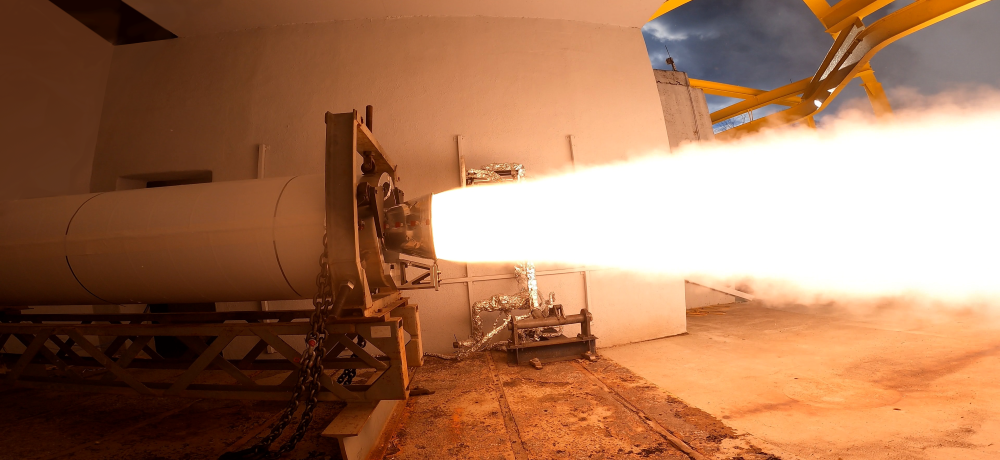
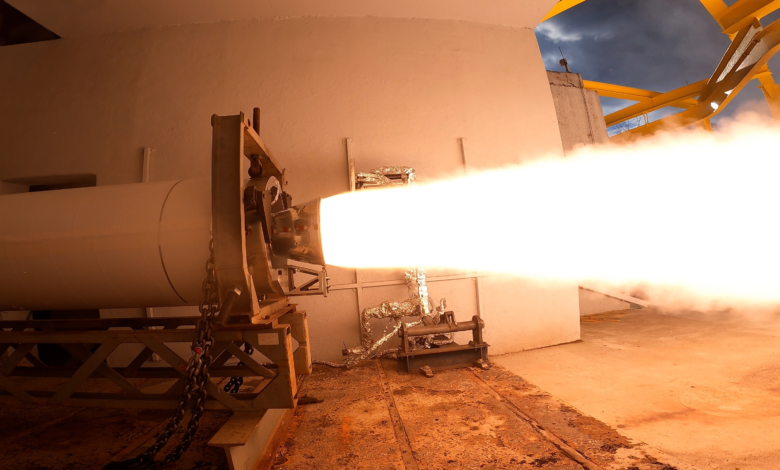
The second stage solid rocket motor completes a static fire test on November 21, 2024 in Elkton, Maryland. (Photo Credit: Northrop Grumman)
Northrop Grumman is delivering advanced propulsion and solid rocket motors at scale today while also working to further expand capacity to meet the increasing customer demand and to support a resilient defense industrial base. Propulsion operations span six key locations in West Virginia, Utah, and Maryland, amounting to a total of 10 million square feet of manufacturing space. The company plans to triple its capacity for small tactical SRMs at its West Virginia facility, double the production capacity for large SRMs in Utah, and increase Maryland’s capacity by 25% to accommodate future high-demand programs, including air-breathing hypersonic propulsion solutions.
As a leading global aerospace and defense technology entity, Northrop Grumman’s innovative solutions equip customers with the necessary capabilities to connect and protect the world while pushing the boundaries of human exploration throughout the universe. Guided by a shared commitment to solving the toughest challenges faced by customers, Northrop Grumman’s personnel redefine the possible on a daily basis.
Source: Northrop Grumman (2026-01-07T09:30:00Z)