


American Rheinmetall delivers first Lynx XM30 prototype to the U.S. Army
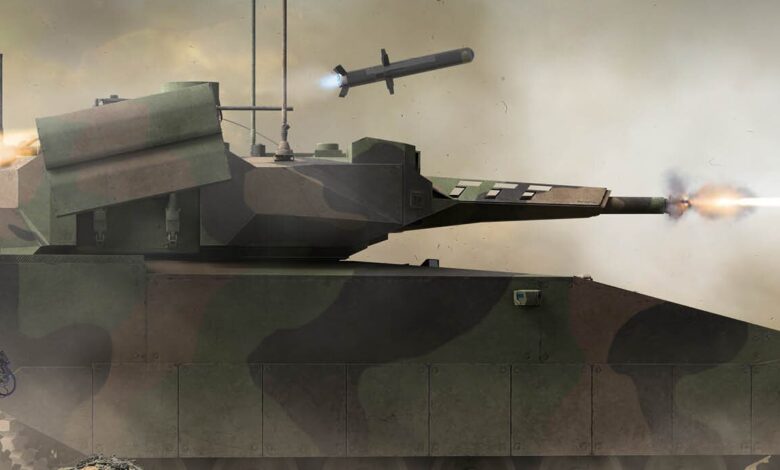
American Rheinmetall, based in Auburn Hills, MI, has recently delivered the first of eight Lynx XM30 combat vehicle prototypes to the U.S. Army. This significant milestone is part of the competitive program aimed at replacing the legacy M2 Bradley Fighting Vehicle. Following the delivery, the initial prototype will undergo government-led developmental and performance testing, a crucial step in the program’s broader Phase 3/4 Engineering and Manufacturing Development (EMD) contract, which is valued at approximately $764 million. This contract includes elements such as digital design, physical prototyping, and full-system validation.
“Delivering our first prototype to the Army is an important step as the XM30 Combat Vehicle program enters a more visible phase,” stated Matt Warnick, CEO of American Rheinmetall. “Team Lynx now has the opportunity to show the Army that we can deliver on the promise of a modern replacement for the Bradley.”
Later this year, American Rheinmetall plans to deliver the remaining seven prototypes, which will be utilized for operational unit training. This deployment runs concurrently with the technical evaluations as part of the Army’s Transformation in Contact (TiC) 2.0 initiative—a modernization effort designed to rapidly prototype, test, and field advanced technology directly to deployed and training units. Once the vehicles have passed initial military safety checks, Soldiers will begin active field maneuvers, which are critical for preparing them for large-scale combat simulations.
“Executing a parallel evaluation timeline requires a level of industrial agility that Team Lynx was built for,” Warnick commented. “We are proving that the U.S. Defense Industrial Base can move at the speed of operational relevance, stripping years off traditional development timelines to get the right capability to the Warfighter.”
The advanced prototype deliveries are made possible through a well-coordinated multi-state production pipeline, showcasing the agility and resilience of the U.S. Defense Industrial Base. The process initiates with precision turret fabrication in Plymouth, Michigan, followed by the transition of sub-systems to Slidell, Louisiana, for final hull and chassis integration. Once assembled, the vehicles undergo comprehensive automotive shakeout trials to ensure mechanical readiness, before returning to Louisiana for paint and final detailing. This streamlined process emphasizes strict quality control and concludes with a joint inspection alongside the Defense Contract Management Agency (DCMA) prior to official government acceptance.
The Lynx XM30 is specifically designed to perform well in complex operational environments characterized by drones, precision weapons, and electronic warfare. To facilitate rapid technology integration throughout its service life, the platform features a modular design and an adaptive open architecture. Notably, it introduces a hybrid-electric powertrain, optimizing power generation and enhancing battlefield mobility. As a digitally integrated fighting system, the Lynx XM30 provides secure, real-time connectivity, embedding the advanced intelligence required for crew and infantry squad battlefield survivability.
Serving as the prime contractor, American Rheinmetall leads Team Lynx, an elite industrial coalition that incorporates the specialized capabilities of Textron Systems, Raytheon, L3Harris Technologies, Allison Transmission, and Anduril Industries, all supported by a quickly expanding network of domestic suppliers.
About Rheinmetall in the U.S.
The Rheinmetall family of U.S. companies comprises American Rheinmetall in Auburn Hills, MI (headquarters); Biddeford, ME; Lansing, MI; Lapeer, MI; Plymouth, MI; St. Marys, OH; and Vienna, VA, alongside American Rheinmetall Munitions located in Camden, AR; Texarkana, TX (Expal USA); Vienna, VA (headquarters); and Windham, ME.