


Northrop Grumman’s Pegasus Rocket to Power Unprecedented NASA Observatory Rescue
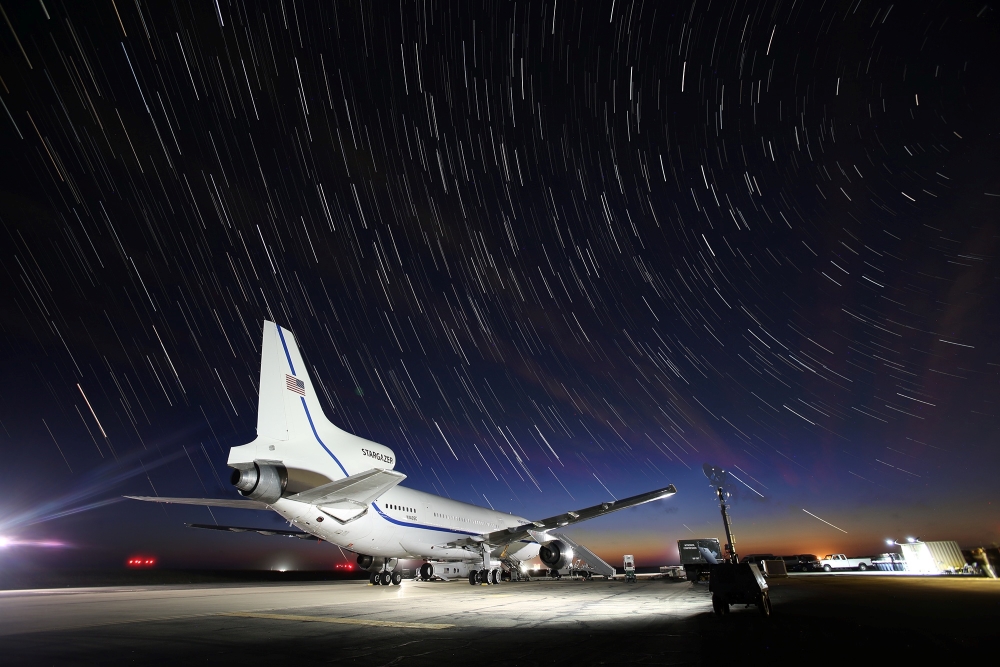
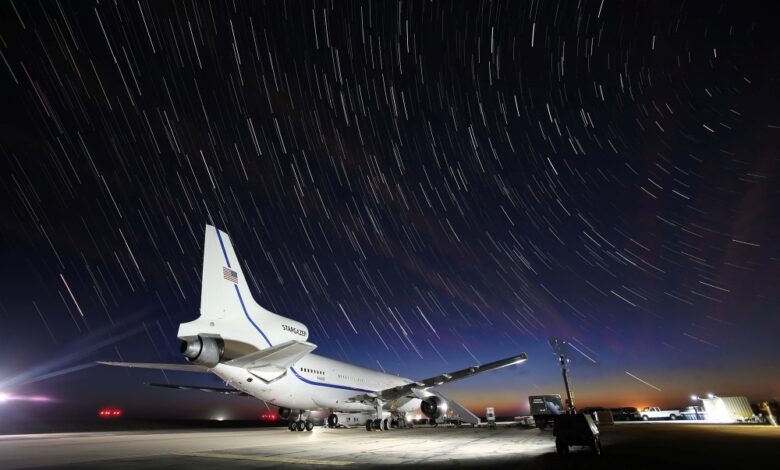
The Pegasus rocket mated to the L-1011 carrier aircraft, which acts as a reusable first stage for missions. (Photo Credit: Northrop Grumman)
This June, Northrop Grumman’s Pegasus rocket is set to undertake a critical mission aimed at preventing NASA’s Neil Gehrels Swift Observatory from falling back to Earth. The Katalyst Space LINK spacecraft, carried aboard the Pegasus rocket, will attempt to intercept the Swift observatory and elevate its orbit, extending the mission’s operational life. This ambitious initiative not only seeks to preserve a landmark scientific asset but also aims to open doors for advanced research beyond our planet.
Swift is experiencing orbital decay, necessitating an urgent launch to ensure recovery before atmospheric drag renders intervention impractical. The Pegasus rocket, celebrated for its innovative air-launched design, is uniquely positioned to meet the mission’s orbit, timeline, and budgetary constraints. Deployed from the L-1011 carrier aircraft, Pegasus can efficiently deliver payloads to low Earth orbit, providing unparalleled flexibility and speed compared to other launch systems. It is one of the few available rockets capable of reaching Swift in time.
Since its introduction in 1990, Pegasus has successfully conducted over 45 launches, establishing itself as a vital asset for deploying advanced scientific and exploratory satellites. Its versatility—enabling assembly, testing, and launch from multiple global locations, including Kwajalein Atoll for this particular mission—demonstrates its unmatched adaptability.
Northrop Grumman has maintained a strong commitment to Pegasus, as noted by chief engineer Steve Hollo, who has been involved since 1998. He recognizes the significance of Pegasus in launching scientific missions, highlighting its rapid assembly, testing capabilities, and global operability. “The latest mission features a complete avionics upgrade, enhancing the rocket while preserving its historical technological advancements,” Hollo stated. “We have the extraordinary advantage of being unbound by a single launch site, granting us responsiveness that few other launch vehicles can provide.”
The upcoming launch is a testament to Northrop Grumman’s engineering prowess and commitment to collaboration. The Swift observatory, constructed at the company’s Gilbert, Arizona facility and launched in 2004, was designed to study gamma-ray bursts—some of the universe’s most powerful and transient explosions.
John Jordan, Swift’s original chief engineer, elaborates on the observatory’s purpose: “Swift was designed to capture fleeting gamma-ray bursts that previous telescopes couldn’t detect. It observes bursts across a wide area before swiftly re-positioning to employ powerful X-ray and ultraviolet telescopes to investigate the afterglow of those events.” To date, Swift has identified over 1,700 bursts, contributing crucial insights into the phenomenon, including the identification of merging neutron stars as a source for one category of gamma-ray bursts.
Swift’s enduring success stems from its thoughtful design, dependable engineering, and strong collaboration with the scientific community. Initially envisioned for a two-year mission, Swift has surpassed two decades of operational excellence. In this time, Northrop Grumman has consistently provided everything needed for in-orbit support of Swift.
As Northrop Grumman looks toward the future, the legacies of missions like Swift and Pegasus empower the company to push the boundaries of space exploration and launch capabilities. Upcoming projects are inspired by the sustained successes of these missions, including the development of rapid-response satellite constellations and deep-space observatories. The forthcoming Pegasus launch is not just a mission; it represents the continuation of an extraordinary journey and an engineering legacy that is poised to deliver critical scientific contributions beyond Earth’s atmosphere.
Source: Northrop Grumman (2026-06-17T16:54:00Z)