

Interview with Mehdi Bouchenak, Safran CEO | Dubai Airshow
Safran, a prominent player in the aerospace sector, is dedicated to supporting the aviation industry’s goal of achieving net-zero CO2 emissions by 2050. The company has been rooted in the UAE for over three decades, offering services that encompass maintenance, safety systems, and propulsion.
We recently interviewed Mehdi Bouchenak, CEO of Safran Emarat Ltd, to delve into the organization’s initiatives for advancing greener aviation and how collaborations within the UAE are influencing the future of sustainable flight.
Q: Safran has a long-standing relationship with the UAE. How would you describe the Group’s footprint here today?
Safran’s journey in the UAE began more than 30 years ago, starting with our initial office in Abu Dhabi, where we provided maintenance support for the M53 engines used in the Mirage 2000. Interestingly, our involvement dates back even further—almost synchronizing with the UAE’s inception in the early 1970s—when the country’s inaugural fighter jet, the Mirage 5, was powered by Snecma’s ATAR engine. Over five decades, Safran has partnered with the UAE to develop its aerospace and defense capabilities. Currently, we employ over 220 individuals across five locations, establishing the UAE as our largest base in the Middle East.
Q: The Dubai Airshow’s sustainability panel aims to focus on “real impact with minimal disruption.” What does that mean for Safran?
For us, it signifies progress toward decarbonized aviation without upsetting the current ecosystem. At Safran, we are refining conventional engine technologies by lowering fuel consumption and ensuring strong compatibility with Sustainable Aviation Fuels (SAF). The LEAP engine, which powers the Airbus A320neo, Boeing 737 MAX families, and COMAC C919, achieves up to a 15% reduction in fuel consumption compared to previous models, demonstrating its efficiency even in the challenging Gulf conditions. LEAP engines seamlessly integrate with approved drop-in blends containing 50% SAF and have completed multiple demonstration flights using 100% SAF, including several Airbus A321neo and Boeing ecoDemonstrator flights utilizing pure SAF.
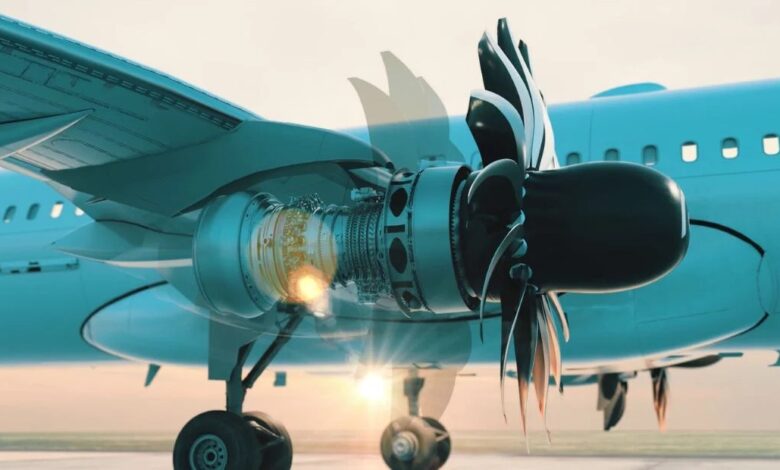
We are already progressing toward our next objective. In collaboration with GE Aerospace, we are creating next-generation engines slated for aircraft manufacturers by the mid-2030s, targeting a reduction of up to 20% in fuel consumption. This is the RISE Program (Revolutionary Innovation for Sustainable Engines), initiated in June 2021, which aims for a 20% decrease in CO₂ emissions with conventional jet fuel while remaining fully compatible with SAF. These advancements will be achieved through a new open fan architecture—eliminating the nacelle enclosure—and innovative technologies such as additive manufacturing and composite materials to foster lighter, more efficient components.
Such a transition extends beyond just new technology; it is part of the broader industry roadmap toward net-zero emissions by 2050, where technology is one significant pillar. Building an infrastructure and ecosystem that facilitates low-carbon flight at scale is equally important.
Q: What role does the UAE play in Safran’s sustainability journey?
The UAE is central to our sustainability approach. It fosters an environment where innovation occurs swiftly, and ideas are rapidly transformed into actions. This accelerates Safran’s developmental focus, especially as the entire aviation sector shares the goal of achieving net-zero emissions from civil aviation by 2050—a target to which Safran is wholly committed.
We have collaborated with local partners from the outset in the UAE’s sustainability endeavors. We were early stakeholders in the national biofuel committee and initiatives promoting SAF. Notably, we are founding members of the Sustainable Bioenergy Research Consortium (SBRC), which is dedicated to advancing aviation biofuels derived from sustainable sources like saltwater plants and other renewable feedstocks. This initiative, supported by the UAE’s National Policy on Biofuels, strives to boost SAF production, formulate supportive policies, and help the aviation sector inch closer to its collective net-zero target.
Q: How is Safran reducing its own environmental footprint?
Our push toward net-zero aviation is part of a broader strategy that encompasses our operations, facilities, and the entire value chain. We are committed to achieving a 50.4% reduction in CO₂ emissions from our operations by 2030 compared to 2018 levels. We are also engaging with our suppliers to align their emission reductions with the Paris Agreement.
Furthermore, we are allocating a significant portion of our innovation resources toward sustainability, with 75% of our research and technology spending aimed at enhancing the environmental performance of our products. These objectives guide every aspect of our operations, including our activities in the UAE.
Q5: Looking ahead, what’s your vision for Safran in the region?
Our vision is to continue being a long-term partner in the Middle East’s journey toward sustainable, connected, and resilient aviation. We plan to expand our maintenance and repair presence, invest in local talent, and reinforce collaboration with regional partners. We take pride in being part of an ecosystem that embraces sustainability as an opportunity rather than a challenge. For us, it’s about mutual growth and shaping the future of aviation beneficially for all.