

Tech Demo Proves Out MQ-4C Triton and P-8 Poseidon Enhanced Interoperability
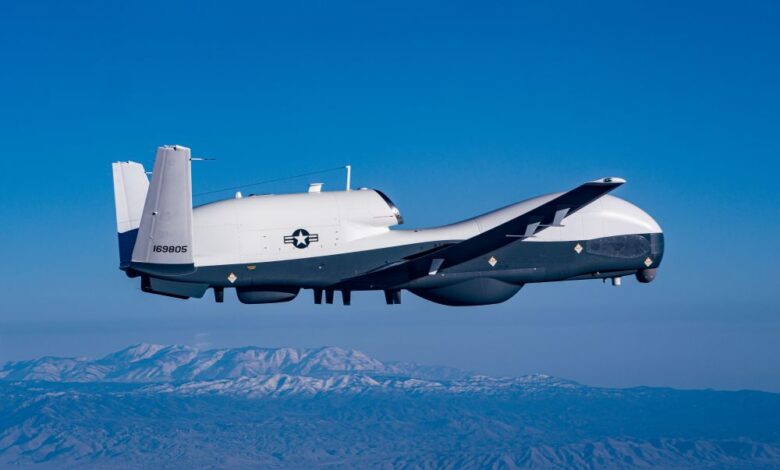
SAN DIEGO, Calif. – Aug. 5, 2026 – Northrop Grumman (NYSE: NOC) and Boeing have successfully demonstrated enhanced interoperability between the unmanned MQ-4C Triton and the manned P-8A Poseidon in a jointly funded technology demonstration. This event marked a significant milestone, showcasing the ability of these two systems to collaborate and automate mission control using open systems architecture.
- The lab demonstration illustrated how the MQ-4C Triton and the P-8A Poseidon exchanged maritime intelligence through a standardized interface, facilitating machine-to-machine mission planning and execution. In this exchange, Triton’s advanced system utilized AI algorithms to collect, process, and share intelligence data in response to requests from the P-8A Poseidon system.
- Thanks to this standardized interface, Triton can now engage with other U.S. and allied assets that also share the interface. This integration reduces operator workload and accelerates decision-making for commanders, leading to quicker and more cost-effective platform integration.
- The Universal Command and Control Interface serves as a machine-to-machine collaboration standard based on Open Mission Systems and Autonomy – Government Reference Architecture.

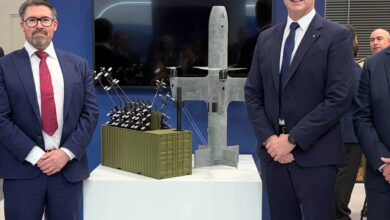
Photo Credit: Northrop Grumman
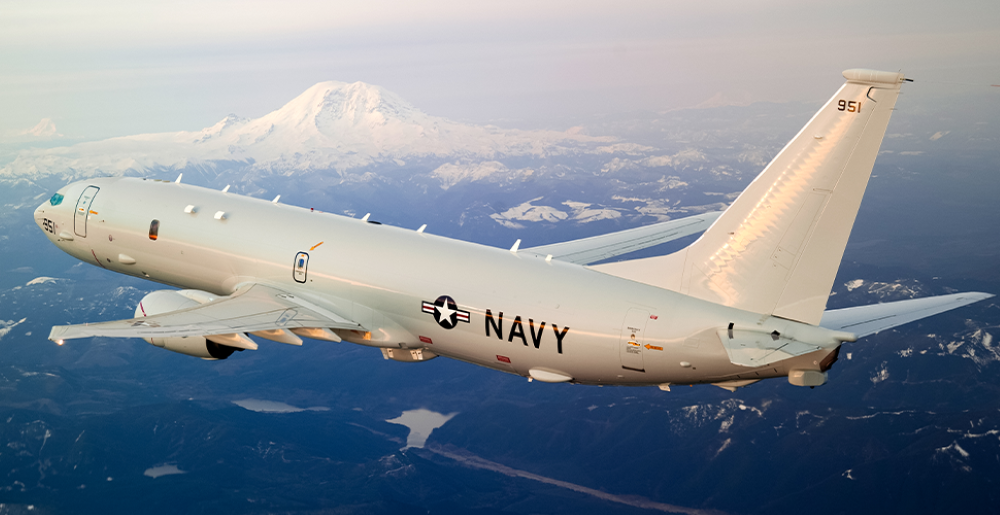
Photo Credit: Boeing
Experts Weigh In:
Jane Bishop, vice president and general manager of Northrop Grumman’s global surveillance division, stated, “The MQ-4C Triton and P-8A are the backbone of the U.S. Navy’s maritime patrol and reconnaissance force, delivering complementary capabilities unmatched by any other platforms. This demonstration underscores the flexibility of our systems, our unwavering industry investment, and the strength of our industry relationships. Our commitment to pushing the boundaries of advanced technology ensures that U.S. and allied operators maintain an unparalleled edge against evolving maritime threats.”
Tory Peterson, vice president of the Boeing P-8 Program, commented, “This Poseidon-Triton teaming demonstration unlocks real-world capability and interoperability for the U.S. and allies. We’re investing to ensure that current and future global P-8A operators can expand the scope and effectiveness of their missions with low-risk, evolutionary enhancements on the most advanced maritime patrol and reconnaissance aircraft already in service.”
Program Details:
The MQ-4C Triton stands as the premier unmanned maritime intelligence, surveillance, reconnaissance, and targeting aircraft. Designed for the U.S. Navy and the Royal Australian Air Force at Northrop Grumman’s facility in Palmdale, California, Triton undertakes a spectrum of missions that include maritime patrol, signals intelligence, and search and rescue. These aircraft enable unmatched persistent surveillance, which supports early predictions of adversary behaviors, improved planning, and enhanced joint military operations.
Northrop Grumman is a leading global aerospace and defense technology company, pioneering solutions that equip customers to connect and protect the world while pushing the boundaries of human exploration across the universe. Driven by a shared purpose to tackle the most challenging problems faced by customers, our employees redefine what is possible every day.
Source: Northrop Grumman (2026-08-05T14:00:00Z)