


“Shield AI and Destinus Showcase Cutting-Edge Autonomous Strike and Teaming Strategies in Groundbreaking Flight Exercise”
Shield AI and Destinus Advance Autonomous Strike Capabilities
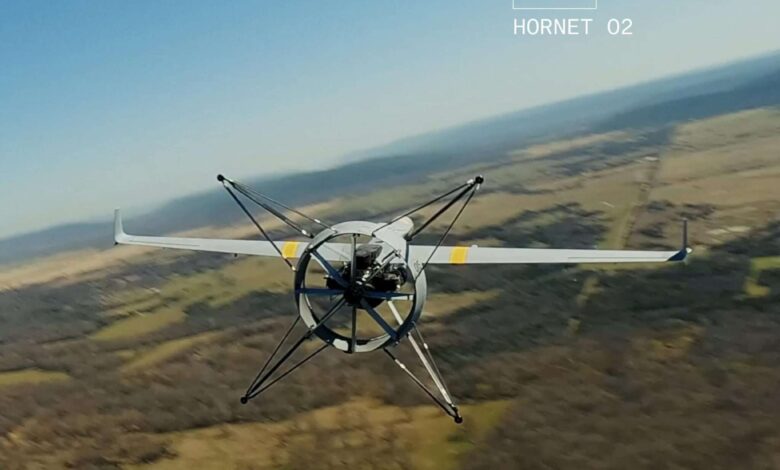
Shield AI in partnership with Destinus has achieved a significant milestone by demonstrating advanced autonomous collaborative strike capabilities using the Destinus Hornet. This innovative interceptor system is specifically designed for counter-Unmanned Aerial Systems (counter-UAS) missions, providing effective responses against loitering munitions, drone swarms, and other uncrewed hostile threats.
The successful tests, held in Segovia, Spain, validated the exceptional piloting skills of Shield AI’s Hivemind AI, showcasing its capacity for real-time coordination and adaptive responses in contested airspace. This capability empowers operators to respond swiftly to large-scale unmanned threats and enhances operational efficiency.
This latest achievement builds upon two previous phases of integration. Phase 1 was completed in under two months, establishing the Hivemind platform control on the Hornet. Phase 2 saw successful flight demonstrations of V-BAT and Hornet in a multi-platform teaming scenario. The Segovia campaign aimed to fulfill the operational concept developed for the Destinus Ruta, a cost-effective turbojet strike platform designed for terrain-following missions in GNSS-denied environments.
“Modern autonomous systems must accurately sense threats, adapt to dynamic environments, and take action autonomously, particularly in contested areas where direct command may be compromised,” stated Christian Gutierrez, Senior Vice President of Hivemind at Shield AI. “Our demonstration in Segovia is a repeatable, scalable autonomous capability that effectively closes the reconnaissance-to-strike loop at the speed required by modern threats.”
During Phase 3, a complete mission sequence was executed in alignment with the Ruta operational concept, incorporating autonomy-assisted mission planning, radio testing, terrain-following navigation, in-flight updates, and precise terminal maneuvers on command. The upcoming phase aims to transition these advanced capabilities to the Destinus Ruta platform in Ukraine, promoting coordinated strike operations between V-BAT and multiple Ruta systems. This follow-up evaluation will emphasize repeatability, reliability, and seamless integration with existing command-and-control frameworks.
“Destinus platforms utilize our proprietary flight control architecture; the validation from Hivemind shows how we can integrate third-party autonomy while maintaining system design authority,” explained Tim Moser, Chief Technology Officer at Destinus. “Achieving repeatable integration with clear command authority transforms autonomy from a conceptual demonstration into reliable field operations.”
The Destinus Hornet serves as a multi-role autonomous solution, capable of conducting counter-UAS missions, strikes, reconnaissance, data relay, and various security operations. Hornet systems are integral to a broader layered air-defense strategy to safeguard high-value locations and critical infrastructure.
Powered by the Hivemind AI pilot, these platforms can independently sense, decide, and act within specified operational parameters. Unlike conventional autopilots, which follow fixed routes, Hivemind can dynamically adjust mission plans, respond to unforeseen conditions, navigate around obstacles, and accomplish complex tasks with remarkable safety and precision.
Shield AI will showcase its innovations at Eurosatory, located in Hall 5A, stand A276. Destinus will also have an exhibit in Hall 4, stand E255.