


Unjammable Lifeline: L3Harris Fiber-Optic Tethers Keep Warfighters Connected
In the demanding operational environments of special operations, real-time intelligence, surveillance, and reconnaissance is crucial. Losing connectivity under such circumstances can jeopardize mission success. L3Harris Technologies addresses this need with its innovative fiber-optic tether systems, ensuring that warfighters remain connected even in the most hostile terrains.
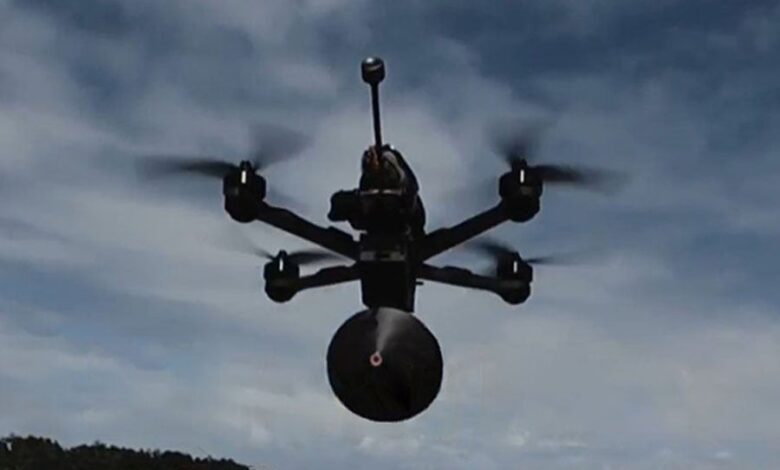
L3Harris’ fiber-optic tethers enable unjammable communications for both drones and subsea platforms, effectively countering the vulnerabilities inherent in radio frequency (RF) systems that adversaries frequently target with jamming tactics in contested zones.
“The threat is no longer theoretical – it is shaping the battlefield in real time. We see adversaries aggressively jamming, disrupting, and hijacking RF-controlled unmanned aerial systems at scale, exposing a critical vulnerability in modern drone operations,” stated Dave Kornick, President of Intelligence and Cyber at L3Harris. “Operational success now depends on resilient command-and-control architectures that can survive in the most contested electromagnetic environments. Our Drone Fiber-Optic Tethers (DFT) provide a secure, physical connection between the operator and the aircraft, ensuring uninterrupted control, mission assurance, and battlefield survivability when electronic warfare conditions are at their worst.”
Designed for both small unmanned aerial systems (sUAS) operating over contested areas and subsea platforms in denied environments, the L3Harris fiber-optic tethers equip special operations and conventional forces with essential communication capabilities.
Defeating Electronic Warfare in Real-World Operations
L3Harris’ DFT systems have been optimized for missions extending beyond 25 kilometers and have proven their efficacy in overseas battlefields against active electronic warfare systems. These systems provide data transfer speeds that are ten times faster than RF alternatives, all while being significantly lighter and more compact than other tethered options, thus facilitating secure, high-bandwidth communications that remain operational under duress.
Manufactured in Palm Bay, Florida, these National Defense Authorization Act (NDAA)-compliant systems are tailored to enhance mission effectiveness across a wide range of operational scenarios.
Rapid Integration for Existing Platforms
L3Harris has rolled out two media converter systems that allow for swift adaptation of pre-existing RF-controlled drones to fiber-optic functionality:
- Analog Fly-by-Fiber Systems: Enables seamless integration with NDAA-compliant controllers and works with any universal asynchronous receiver-transmitter (UART)-controlled RF drone.
- Digital Fly-by-Fiber Systems: Offers a compact profile with low size, weight, and power requirements, maintaining latency below 70 milliseconds.

Proven Across Domains
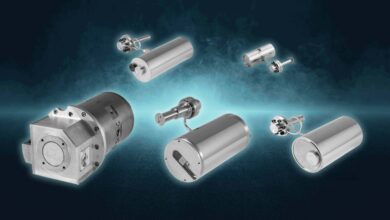
L3Harris’ Micro-Diameter Fiber-Optic (MDF) Cable offers data transfer capacity that exceeds traditional copper systems by over 10,000 times. This technology plays a pivotal role in the Improved Post-Launch Communications System (IPLCS) developed for the Navy’s next-generation MK-48 Mod 8 torpedo.
A multitude of U.S. Navy and industry partners have chosen L3Harris as their provider of fiber-optic tether solutions for maritime and subsea applications, including unmanned surface and underwater vehicle programs.
Investment in U.S. Drone Dominance
As the Department of War accelerates its efforts towards resilient domestic manufacturing, L3Harris is making substantial investments to expand the production of next-generation attritable drone technologies and components manufactured in Palm Bay, Florida. The company’s expansion of advanced fiber pack winders throughout 2025 and 2026 reflects an ongoing commitment to meet the increasing operational demand.
These investments are reinforcing the U.S. defense industrial base, enhancing supply chain resilience to reduce foreign dependency, and ensuring warfighters can access robust, mission-critical fiber-optic solutions designed for the most challenging electromagnetic environments. By scaling its operations now, L3Harris aims to establish itself as a strategic leader in the evolving autonomous warfare landscape and a dependable partner in ensuring U.S. battlefield supremacy.
Platform Integrator. Mission Partner.
Mission partners depend on L3Harris to convert existing RF sUAS platforms into operationally-ready systems equipped with fiber-optic command and control. Ranging from 3D modeling and prototyping to electrical integration, software development, and field flight testing, L3Harris provides comprehensive fiber-optic enablement.
Supported by certified drone pilots, L3Harris delivers the technical expertise, advanced integration capabilities, and NDAA-compliant products required to fulfill the most rigorous mission demands.
As threats from electronic warfare continue to escalate, L3Harris’ fiber-optic tethers equip American warfighters with the secure, high-bandwidth connections needed in both air and sea domains.
Read More About L3Harris’ Fiber-Optic Tether Systems
Source: L3Harris (2026-05-19)