

The C-2A Greyhound: An Unmatched Link from Shore to Sea

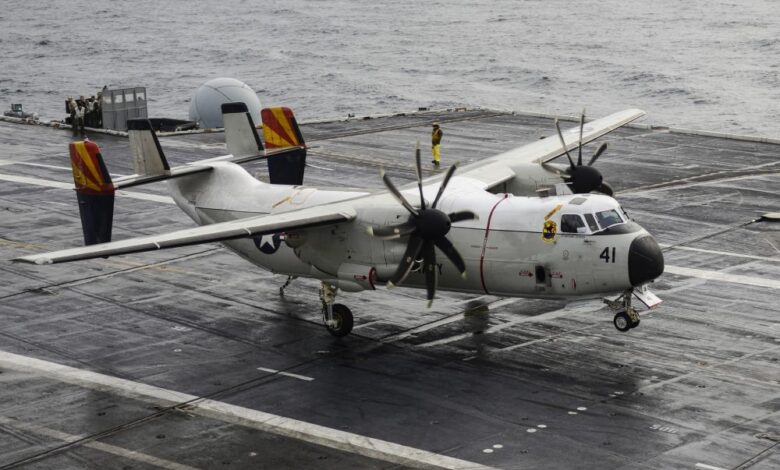
The U.S. Navy’s C-2A Greyhound carrier-onboard-delivery (COD) aircraft (Photo Credit: Northrop Grumman)
The U.S. Navy’s C-2A Greyhound, an aircraft deeply ingrained in naval operations, is entering retirement after a robust 60-year service life, leaving behind an enduring legacy of logistical excellence.
Developed by Northrop Grumman and introduced in the late 1960s, the C-2A Greyhound was engineered specifically for the carrier-onboard-delivery mission. It has consistently provided vital logistics support to U.S. Navy carrier strike groups by transporting personnel, urgent spare parts, mail, and essential cargo from shore to sea. Over the decades, the Greyhound became synonymous with efficiency, reliability, and operational readiness for U.S. Navy crews across the globe.
A Mission-Critical Link from Shore to Sea
The C-2A’s core mission has always remained steadfast: to establish a secure and swift logistics connection between terrestrial bases and active carriers.
Thanks to its spacious cargo hold and rear loading ramp, the Greyhound adeptly carried time-sensitive and high-value items, including jet engines, maintenance equipment, and personnel. Additionally, the aircraft distinguished itself as a special warfare asset, capable of airdropping personnel and supplies into the water.
By facilitating the direct delivery of critical components and personnel to carriers, the C-2A played a pivotal role in maintaining operational effectiveness throughout both peacetime and combat scenarios.
Built for the Carrier Environment
The Greyhound was meticulously designed to meet the unique challenges of carrier operations. Its innovative features such as folding wings and an onboard auxiliary power unit ensured it operated effectively in remote maritime conditions, setting it apart from other cargo aircraft.
Since its debut, the C-2A has shared the flight deck with numerous legendary naval aircraft from the A-6 Intruder and F-14 Tomcat to the F/A-18 Hornet and the fifth-generation F-35 Lightning II. The C-2’s compatibility with 53% of parts used in the E-2 series significantly enhanced its sustainment attributes over the years.
Through continuous updates and maintenance, the platform adapted alongside evolving carrier operations and technological advancements, maintaining its relevance in a changing global landscape.

C-2A with wings folded onboard the USS Harry S. Truman (Photo Credit: Northrop Grumman)
Delivering More Than Cargo
For sailors stationed on carriers far from home, the C-2A meant more than just a supply vehicle; it represented a direct link to life back on shore.
In addition to priority cargo and personnel, the Greyhound transported mail, including care packages containing personal items that helped maintain morale during long deployments.
The sound of the C-2’s approach indicated not only the arrival of essential resources but also reminders of family and friends, fostering a sense of connection and comfort for those at sea.

C-2A Greyhound preparing to land on the USS Harry S. Truman (Photo Credit: Northrop Grumman)
For Northrop Grumman, the legacy of the C-2A Greyhound reflects a long-term commitment to supporting the fleet and ensuring the U.S. Navy can maintain its operational reach and readiness globally.
Currently, C-2A Greyhounds are on display at various locations, including Naval Air Station North Island, the USS Midway Museum, Patuxent River Naval Air Museum, and the National Naval Aviation Museum, with one on loan to the Pima Air and Space Museum.
Discover more about how Northrop Grumman propels advancements in naval aviation here
Source: Northrop Grumman (2026-08-20T16:58:00Z)