

Proven in the Field
The technological landscape of modern warfare is evolving rapidly, and the U.S. Army is keen to ensure that its technological edge remains ahead of potential adversaries.
Through a series of experimental events, the Army is rigorously testing emerging capabilities in increasingly realistic and challenging scenarios. Events such as Lightning Surge, Ivy Sting, and Project Convergence-Capstone 6 are creating vital opportunities to assess not only individual technologies but also the performance of entire networks.
“For L3Harris Technologies, these tests are providing invaluable and actionable data to inform future innovations,” stated Chris Aebli, President of Communications & Spectrum Dominance at L3Harris. “They allow us to proactively determine what works, identify areas needing improvement, and swiftly convert those insights into enhanced capabilities.”
Real-Life Results From Real-Life Testing
Modernization is not confined to laboratory settings.
A technology that performs impeccably under controlled conditions must also operate efficiently across complex terrains, integrate seamlessly with diverse systems, and manage increasing data loads—while retaining resilience in contested environments.
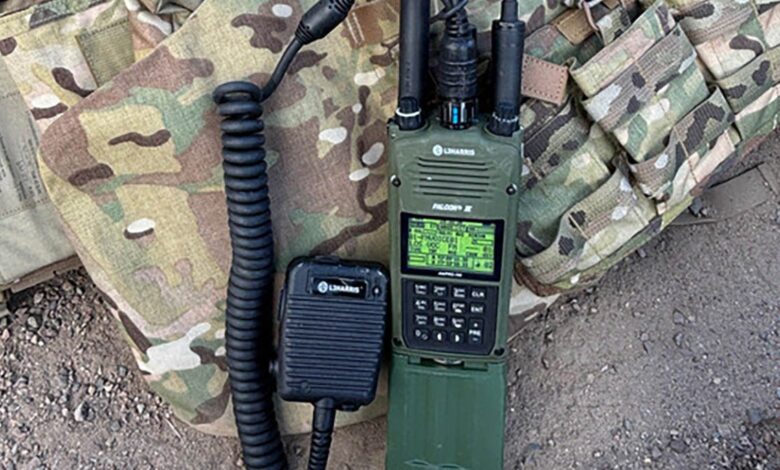
Throughout the Army’s experimentation initiatives, L3Harris showcased robust communications and networking capabilities designed to link soldiers, sensors, platforms, and nodes, as noted by Larry Burris, Senior Principal of Business Development at L3Harris.
“The tactical radio needs to be more than just a voice communication tool,” stated Burris. “It functions as a data transport node and a smart sensor within a wider network, facilitating the transfer of information and enabling innovative software-driven capabilities right at the tactical edge. Each exercise and experiment contributes to our collective learning.”
During various events, the challenge may range from transferring larger volumes of data across networks to ensuring constant communications across challenging terrains. The ultimate goal is to equip soldiers with tools that empower them to make faster, better decisions.
The Strength of Government-Industry Collaboration
The outcomes of the recent Army modernization experiments underscore the benefits of collaboration between industry and the military throughout the developmental phase. This approach involves not just the delivery of technologies but also joint experimentation, learning, and adaptation within an integrated ecosystem.
This iterative strategy supports the Army Command and Control vision, which envisions a future network characterized by open architecture, interoperability, and technology that can evolve in response to evolving threats, missions, and software updates.
For L3Harris, these events reinforce the confidence that the technologies provided to soldiers are enabling them to shoot, maneuver, communicate, and—crucially—secure victories against near-peer competitors.
As the operational environment grows more contested and the urgency of decisions increases, there is no substitute for reliable, trusted capabilities that facilitate swift decision-making and decisive triumphs over adversaries.
Source: L3Harris (2026-09-21)