Owning the High Ground: How Northrop Grumman Leads in ISR&T
With over 500,000 autonomous flight hours and a legacy spanning seven decades, Northrop Grumman is at the forefront of redefining Intelligence, Surveillance, Reconnaissance, and Targeting (ISR&T). By combining cutting-edge multi-domain sensors with real-time data fusion, the company equips multi-mission autonomous systems such as the RQ-4 Global Hawk and the MQ-4C Triton, providing decision-makers with a critical advantage—transforming raw data into dependable intelligence at the pace of emerging threats.
These advanced ISR&T aircraft are pivotal for the warfighter, offering a sustained edge by delivering timely and actionable intelligence across the air, land, and sea domains. As detection challenges intensify, leaders require quick and reliable information to safeguard individuals, allies, and national security interests.

Northrop Grumman’s MQ-4C Triton offers continuous autonomous maritime surveillance and real-time intelligence. (Photo Credit: Northrop Grumman)
Here are six ways Northrop Grumman excels in autonomous ISR&T capabilities:
- Proven Expertise in Uncrewed Platforms: Northrop Grumman has decades of experience in the design, manufacture, and maintenance of uncrewed platforms. Their portfolio includes high-altitude, long-endurance (HALE) platforms that enhance capabilities while minimizing risk and cost.
- Advanced Multi-Sensor Fusion and Data Processing: The company integrates diverse sensor data streams in real-time, forming a cohesive and comprehensive operational picture. High-performance onboard computing and analytics swiftly convert raw data into actionable intelligence, expediting decision-making in contested environments.
- Manned and Unmanned Platform Integration: The MQ-4C Triton is uniquely designed to operate in tandem with the crewed P-8 Poseidon. A recent technology demonstration has validated their enhanced interoperability, significantly extending surveillance coverage and enabling identification and categorization of threats.
- Global Interoperability and Coalition Support: Interoperable systems enable allied forces to share information and coordinate missions effectively. The Triton operations with Australia exemplify the benefits of international collaboration, while NATO aims to boost maritime ISR capabilities with Triton, facilitating coordinated operations and robust coalition defense.
- Proven Battle Management and Targeting Support: Northrop Grumman’s autonomous ISR&T capabilities feed essential intelligence into integrated battle management systems, enhancing multi-domain mission planning and precision targeting, thus maintaining battlefield superiority.
- Continuous Innovation for Future Threats: Over the past five years, Northrop Grumman has invested more than $13.5 billion in infrastructure and R&D, 40% above the industry average. This funding advances autonomous ISR&T platforms and the systems that power them, ensuring resilient and mission-ready capabilities within a continually evolving threat landscape. Northrop Grumman is also partnering with industry leaders to rapidly develop new capabilities.

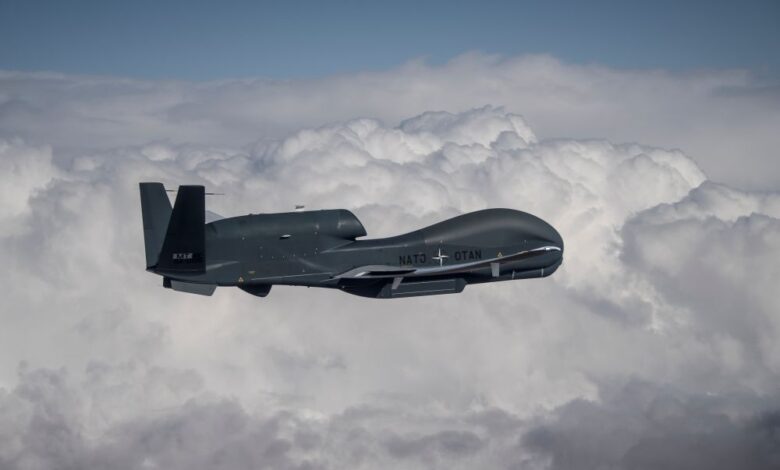
Northrop Grumman’s RQ-4D Phoenix utilizes decades of leadership in autonomy, providing NATO with essential surveillance to deter adversaries and effectively address shared security challenges. (Photo Credit: Northrop Grumman)
Northrop Grumman’s unwavering commitment to innovation in partnership with allied forces empowers warfighters globally with enhanced situational awareness and targeting capabilities. As we look toward the future of autonomy, the focus remains on developing new capabilities that enable operators to prioritize the most critical decisions.
Source: Northrop Grumman (2026-11-19T13:00:00Z)