


Air forces worldwide face mounting pressure to modernize swiftly while maintaining a balance between readiness, affordability, and long-term sustainment. Whether the mission involves intelligence, surveillance, and reconnaissance (ISR), airborne early warning and control (AEW&C), or electronic warfare (EA), operators require adaptable capabilities that can evolve as threats change.
In response, many nations are rethinking the structure of their airborne mission fleets. They seek solutions that allow for quick fielding, efficient upgrades, and sustained operation over decades.
The demand for persistent airborne intelligence is longstanding. For over 60 years, the RC-135 Rivet Joint has played a vital role in providing essential intelligence to military leaders and national decision-makers. Currently, L3Harris Technologies continues to sustain and modernize fleets in both the U.S. and U.K., ensuring that the aircraft remains operationally relevant through thorough depot maintenance, mission systems integration, and technological enhancements. This extensive experience shapes how airborne mission systems are conceived, integrated, and sustained today.
Why Business Jets
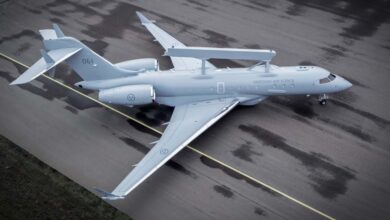
Missionized business jets have surfaced as a compelling choice for nations aiming to enhance capabilities without incurring the costs and complexities associated with larger platforms. Built on commercially successful aircraft, these jets provide high availability, lower lifecycle costs, extensive global support networks, and the versatility to incorporate new sensors and mission systems as operational requirements develop.
For over 70 years, L3Harris has successfully missionized aircraft for some of the most stringent missions globally, including the MC-55A Peregrine, ATHENA-R, ARES, and the EA-37B Compass Call. As the world’s largest mission systems integrator, L3Harris has delivered thousands of airborne mission solutions and modifications across more than 100 aircraft types. This level of expertise enables clients to transition from requirement to operational capability more swiftly while minimizing risk.
Beyond One Mission
The benefits of missionized business jets extend beyond any singular mission area. These aircraft currently address requirements in ISR, AEW&C, EA, and other specialized operations.
Leveraging their commercial foundations, missionized business jets tap into established supply chains, contemporary maintenance practices, and proven aircraft performance. They facilitate sovereign sustainment strategies through in-country partnerships that bolster domestic industries, lessen foreign dependency, and support long-term affordability.
Meeting the Mission
One area of growing interest is airborne early warning and control. Air forces are increasingly seeking enhanced situational awareness and battle management solutions that can seamlessly integrate into joint and coalition operations while remaining affordable for acquisition and upkeep.
AERIS X, a high-altitude airborne early warning and control capability, is tailored for contested environments, reflecting an evolution in force structure planning. Built on a missionized business jet platform, it combines cutting-edge sensing, battle management abilities, and fifth-generation interoperability, designed to deliver persistent air domain awareness while meeting sovereign operational needs. AERIS X features an advanced mission system capable of tracking both high-speed and high-altitude missiles, as well as low and slow unmanned threats.
Missionized business jets are crucial in meeting operational demands by merging advanced mission systems with the agility, flexibility, and readiness of commercially established aircraft. To date, L3Harris has delivered over 100 missionized business jets—surpassing the total of all other competitors combined.
Source: L3Harris (2026-07-16)