

Keeping Critical Missions Cool: How Linear Cryocoolers Enable Advanced Technology
Modern advancements in sensing and electronics have pushed the limits of operational capabilities, enabling applications such as infrared energy detection at extended ranges and the functioning of sophisticated instruments in extreme conditions. A cornerstone of these capabilities is the ability to maintain sensitive components at precisely controlled cryogenic temperatures.
While infrared sensors, scientific instruments, high-performance electronics, and spaceborne payloads serve varied missions, they all rely on thermal conditions that conventional cooling systems often struggle to provide. L3Harris linear cryocoolers are essential in creating and sustaining these conditions, seamlessly fitting within the stringent size, weight, power, vibration, and reliability parameters of larger systems.
Thermal Performance Within Real-World Constraints
Achieving cryogenic temperatures is merely one aspect of the engineering challenge at hand. Today’s sensors and electronic systems are frequently constrained by limited space, tightly controlled power budgets, and strict mechanical requirements. As such, the cooling system must not only deliver the requisite cooling but also integrate efficiently within the surrounding platform.
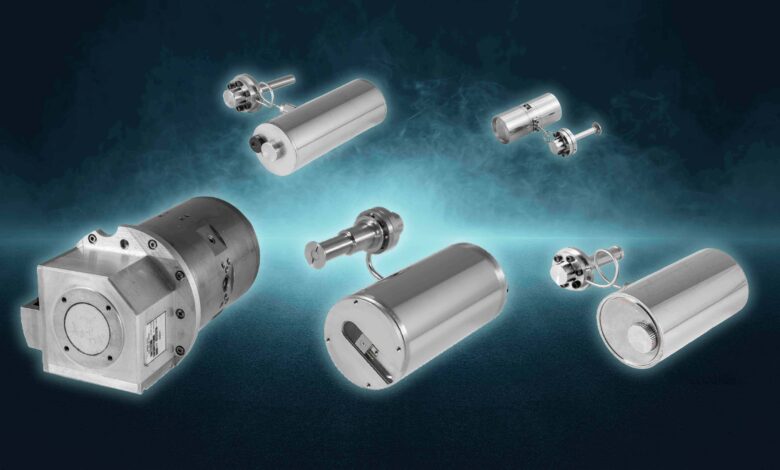
L3Harris linear cryocoolers are meticulously designed to offer controlled cryogenic cooling across a diverse array of system needs and applications. With a variety of cooling capacities, sizes, and configurations available, these cryocooler solutions are capable of supporting applications from infrared sensing and precision instrumentation to advanced electronics and spaceborne systems. The outcome is not just a cooling mechanism, but an integrated thermal-management solution designed to enhance the performance of the supported system.
When Staying Cool Means Staying Still

Mechanical cooling devices inherently induce motion, which can adversely affect the performance of highly sensitive sensors and precision optical systems, even with minimal vibration. Thus, linear cryocoolers must skillfully balance their cooling requirements with the need to minimize mechanical disturbances to the surrounding system.
Specifically designed for vibration-sensitive applications, L3Harris linear cryocoolers provide stable cryogenic cooling while reducing transmitted vibration, an essential capability for infrared imaging and precision optical systems that rely on line-of-sight stability for optimal performance. A prime example is the L3Harris Night Conqueror HD™ sensor system, which integrates the B602™ linear cryocooler to ensure stable and efficient cooling for its infrared imaging sensors in demanding low-light and no-light environments.
Cooling Is a System-Level Challenge
The considerations extending beyond temperature and vibration include power availability, control architecture, and temperature stability. Optional cooler drive electronics facilitate precise temperature regulation and cryocooler control while ensuring efficient power management.
This system-level perspective is vital as effective thermal management transcends merely achieving a target temperature. The cryocooler must deliver the necessary thermal performance while functioning within the platform’s electrical, mechanical, and operational constraints. Such balance is becoming increasingly crucial as sensors and electronics evolve to be more compact, more powerful, and more capable.
Engineered for the Long Haul
Mission-critical technologies often need to operate continuously or for extended durations in harsh environments, rendering reliable thermal-management systems indispensable. L3Harris cryocoolers are engineered for continuous-duty operation and longevity, drawing upon extensive experience gained from supporting fielded applications across infrared imaging and surveillance, airborne and spaceborne systems, advanced electronics, and scientific instrumentation.
Despite the significant differences among these applications, the core role of the cryocooler remains constant: to establish and uphold the thermal conditions required for sensitive technologies to function effectively.
Enabling The Next Generation
As the performance demands placed on advanced sensors and electronics continue to rise, future systems will need enhanced sensing capabilities, increasingly powerful processing, smaller form factors, and improved efficiency, often in more challenging environments. This evolution will impose equally stringent requirements on the technologies that facilitate these capabilities.
Effective cryogenic thermal management will remain a critical element in this equation. By integrating precise cooling, compact designs, vibration-conscious engineering, temperature control, and long-life operational capacity, L3Harris linear cryocoolers provide the essential thermal foundation that advanced systems require to execute their missions successfully. Enabling the next generation of technology begins with ensuring the optimal conditions for performance.
Source: L3Harris (2026-10-06)