


Hanwha unveils next evolution of K9 howitzer
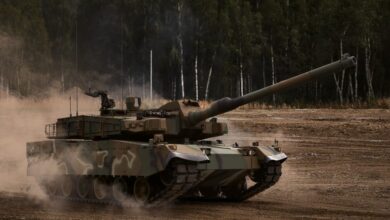
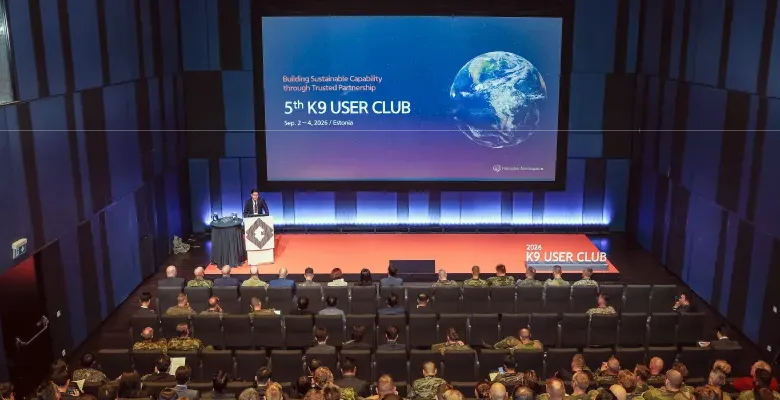
At this year’s K9 User Club held in Estonia, Hanwha Aerospace showcased its vision for the next evolution of the K9 self-propelled howitzer. This evolution illustrates how the established artillery system is advancing beyond its conventional role through innovative operational concepts, platform expansion, and enhanced sustainment strategies designed to meet future battlefield demands.
The three-day forum, taking place from September 2 to 4, gathered over 200 military and industry representatives from seven K9 user nations: South Korea, Estonia, Poland, Norway, Finland, Romania, and Australia. Observers from Spain and Sweden also attended.
Hosted by the Estonian Defence Forces at the Estonian National Museum, the annual gathering provides a platform for K9 operators to share operational experiences, strengthen collaborative efforts, and influence the future of artillery capabilities.
According to Maj. Gen. Viktor Kalnitski, Deputy Commander of the Estonian Defence Forces, “The K9 has established itself as an outstanding and highly capable artillery system. Its performance, reliability, and operational capabilities have earned the trust of a growing number of NATO allies and partner nations. The K9 User Club brings together commanders, artillery officers, operators, technical specialists, and representatives of industry, providing an opportunity to exchange practical experiences and discuss shared challenges.”
Building on the operational lessons learned from K9 user nations, discussions this year are focused on evolving artillery capabilities to address the increasingly dynamic nature of battlefield environments. Participants are considering critical topics such as maintenance best practices, ammunition interoperability, training, and future capability needs while identifying deeper collaboration opportunities among K9 operators.
Giving K9 eyes in the sky
A notable highlight of this year’s User Club is the introduction of a next-generation K9 operating concept that incorporates fire-guidance drones into artillery missions. This approach redefines target detection, engagement, and assessment processes, significantly shortening the sensor-to-shooter cycle.
Hanwha presented a vertical takeoff and landing (VTOL) fire-guidance drone that is capable of detecting and tracking targets, generating coordinates, and directly transmitting this information to the K9 fire-direction system for missions. The drone remains in the target area throughout the engagement, supporting target acquisition before firing, observing impacts during the mission, and conducting battle damage assessments afterward.
This continuous aerial observation allows artillery units to effectively engage moving or time-sensitive targets while reducing dependence on forward observers in vulnerable positions. This integration reflects the evolution of the K9 into a more connected, responsive, and networked artillery platform.
Expanding K9 beyond tracks
The next phase of the K9’s development extends beyond its combat capabilities to redefine the platform itself. Drawing on decades of operational success, Hanwha Aerospace is showcasing the K9’s scalability and adaptability, positioning it as a foundation for a broader family of artillery capabilities.
Leveraging proven technologies, operational insights, and ongoing innovations, Hanwha aims to expand the K9 platform into new artillery solutions tailored to changing operational needs. This strategy ensures new capabilities while maintaining the reliability, survivability, and firepower that have established the K9 as one of the world’s most successful self-propelled howitzer systems.
To exemplify this vision, Hanwha discussed new wheeled artillery concepts that incorporate advanced technologies, including the K9A2’s fully automated turret, to enhance operational mobility, deployment flexibility, and responsiveness. These concepts demonstrate how established K9 technologies can be adapted beyond traditional tracked configurations, enabling more agile fire support while capitalizing on the platform’s mature technology and operational experience.
Furthermore, Hanwha’s recent selection for the U.S. Army’s Mobile Tactical Cannon (MTC) prototype program underscores the company’s expanding expertise in next-generation mobile artillery and the global competitiveness of its advanced technologies in the artillery sector.
These advancements illustrate that the K9 is transforming from a conventional self-propelled howitzer into a versatile and adaptive artillery platform, capable of supporting various configurations, integrating emerging technologies, and addressing diverse operational requirements for the future battlefield.