


Executing the National Defense Strategy: How the Army, Team Lynx and XM30 Get It Right
By Larry Q. Burris Jr., Head of Army Ground, Air and Communications Programs at L3Harris, and retired U.S. Army brigadier general
Team Lynx’s XM30 and the National Defense Strategy
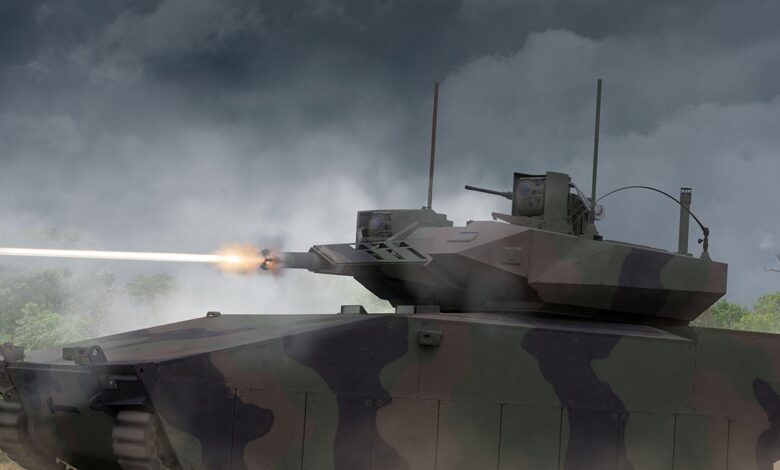
The National Defense Strategy (NDS) emphasizes the necessity for the United States to “Supercharge the U.S. Defense Industrial Base.” This involves reinvesting in production capacity, fostering innovation, leveraging technologies such as artificial intelligence, and removing existing barriers to deliver capabilities rapidly and effectively for the Joint Force. A prime example of executing this vision is the U.S. Army’s XM30 program.
Reflecting on my experience as commander of Charlie Company, 3-15 Infantry during Operation Iraqi Freedom, I led troops through pivotal moments of the war—from advancing into Iraq alongside the 3rd Infantry Division to engaging in the critical Thunder Runs into Baghdad. The performance of our infantry fighting vehicles was vital during these operations, underscoring the need for our soldiers to have access to modern, reliable fighting platforms in increasingly challenging combat environments.
Team Lynx is a testament to the “Arsenal of Freedom” that the Department of Defense aims to rejuvenate, bringing together a consortium of defense technology companies that collaborate to deliver capabilities with speed and agility. This initiative includes American Rheinmetall, L3Harris Technologies, Raytheon, Textron Systems, Anduril Industries, and Allison Transmission, all working in concert to align innovation with dependable performance, advanced technologies with disciplined production, and swift responses with sustainable long-term operations—exactly the approach envisioned by the NDS.
Read Full Article in ‘Defense News’

Source: L3Harris (2026-07-15)