

The Future of Aviation | Dubai Airshow
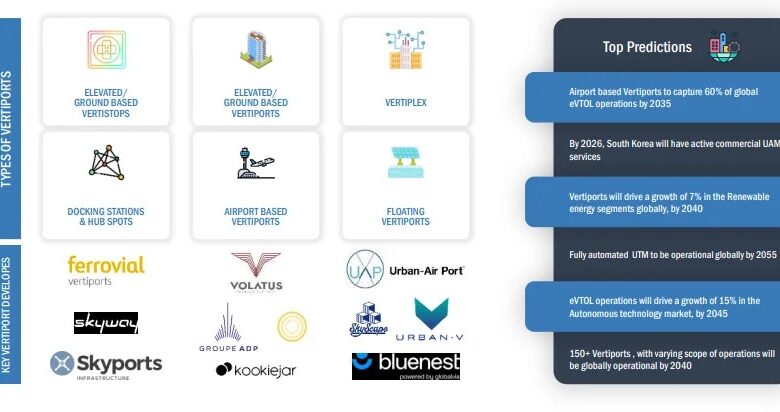
Source: MarketsandMarkets
Introduction
The aviation landscape, encompassing both commercial and military sectors, is evolving as a result of significant technological advancements. Innovations in next-generation aircraft design, the emergence of AI-driven operational intelligence, and a sweeping digital transformation are conspiring to redefine aircraft performance, mission capabilities, and the economics, safety, and environmental considerations of global air travel and defense operations.
Following the turbulence caused by the COVID-19 pandemic, the aviation industry is demonstrating a remarkable recovery, showing growth despite challenges like workforce shortages and financial pressures. It has transitioned from struggling with fleet utilization to leveraging autonomous systems in airside operations to efficiently handle the rise in passenger traffic.
The Dubai Airshow, scheduled for November 17–21, 2025, is poised to be a landmark event for the aviation industry. A vital date on the global aviation agenda, the show will showcase a diverse array of activities including the introduction of live electric Vertical Take-Off and Landing (eVTOL) aircraft, state-of-the-art space technology exhibits, and innovative networking events such as twilight runway parties and dedicated learning zones for youth. This event promises to serve as a transformative platform connecting industry leaders, innovators, and emerging talent, underscoring Dubai’s status as a central hub for aerospace progress.
Flying Forward: Aircraft Design and Vertiport Infrastructure Evolution
The next generation of aircraft design is shifting from mere incremental improvements to revolutionary innovations in airframe architecture, propulsion, and materials. In the commercial aviation realm, advanced concepts like blended wing body (BWB) models, laminar flow control, and hybrid-electric propulsion systems are currently being tested to boost fuel efficiency and reduce emissions. Meanwhile, the adoption of advanced composites and additive manufacturing technologies is enabling the development of lighter, stronger aircraft structures equipped with integrated sensors for real-time health monitoring.
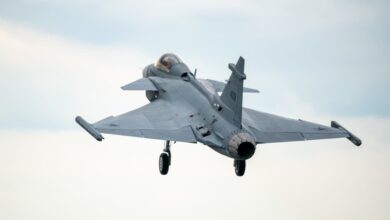
Military aviation continues to focus on enhancing stealth capabilities, modularity, and the adaptive morphing of wings designed to support versatile, multi-role missions. Notably, the emergence of hypersonic prototypes is paving the way for unprecedented speeds in strike and reconnaissance operations.
Across both sectors, sustainability remains a top priority, with innovations such as hydrogen propulsion and fully electric regional aircraft poised to significantly lessen environmental impact. These advancements are not only aimed at improving aircraft performance but also at enhancing survivability, operational efficiency, and lifecycle costs, ultimately shaping the future of aerospace innovation.
Supersonic and hypersonic capabilities are ushering in transformative changes within the aerospace industry through innovative design principles and cutting-edge technologies. These advancements address the unique challenges posed by high-speed flight, including extreme thermal conditions, aerodynamic efficiency, and shockwave management. Modern aerodynamic designs—featuring streamlined fuselages, chine configurations, and optimized nose shapes—are being employed to reduce drag and limit sonic booms for improved environmental compliance and passenger comfort. New thermal protection systems that incorporate advanced ceramics, carbon–carbon composites, and heat-dissipating alloys are being developed to protect aircraft structures from intense aerodynamic heat. Adaptive control surfaces and morphing wing technologies increase stability and maneuverability across a wide speed spectrum from subsonic to hypersonic.
Innovative propulsion systems, including dual-mode ramjets, scramjets, and combined-cycle engines, facilitate sustained flight beyond Mach 5, enhancing speed and strategic operational capabilities. Integrated fuel and cooling systems further improve overall performance. Additionally, state-of-the-art computational tools, such as fluid dynamics simulations, wind tunnel testing, and digital twins, are expediting development timelines while ensuring reliability prior to flight. Autonomous flight control systems powered by AI are elevating operational precision in complex environments.
These collective technological strides are establishing new norms in speed and endurance, generating exciting prospects for high-speed transportation, reconnaissance, and military applications.
The deployment of eVTOL aircraft in the Middle East is rapidly advancing, propelled by urban air mobility initiatives and smart city strategies. Dubai stands at the forefront, with Joby Aviation, Archer Aviation, and Skyports Infrastructure collaborating with the Roads and Transport Authority (RTA) to commence air taxi services by 2026, backed by comprehensive vertiport networks throughout the city. In Saudi Arabia, NEOM is investing in Volocopter’s eVTOL ecosystem to enhance its ambitious urban development, with flight tests already underway. Moreover, partnerships among global eVTOL developers, regional regulators, and infrastructure providers are increasingly focused on certification, airspace integration, and vertiport development. These coordinated efforts are positioning the Middle East as a frontrunner in eVTOL services, aiming to improve urban mobility, sustainability, and connectivity across extensive projects and major urban centers.
It is estimated that over 1,000 vertiports will be established globally between 2024 and 2028, with approximately 620 expected to be operational by 2028. North America and China lead in numbers, while the Middle East excels in per-site investment and strategic development. Europe’s first vertiport at Cergy-Pontoise (near Paris) has been operational since 2022, serving as a testing ground for passenger flow management and infrastructure standards. In the UK, construction of the Bicester vertiport began in early 2025, reached completion by mid-year, and is expected to begin operations in 2026.
The Middle East is increasingly recognized as a leader in advanced air mobility (AAM), driven by substantial infrastructure investments, adaptable regulations, and collaborative partnerships that link aircraft with vertiport networks. Worldwide momentum is building through testing projects and infrastructure forecasts, laying the foundation for the widespread integration of eVTOL aircraft.

AI – The Unseen Co-Pilot and Its Influence on Aviation
Artificial intelligence (AI) is revolutionizing the aviation sector, especially in the manufacturing and delivery of commercial aircraft. By enhancing efficiency, quality, and speed along the supply chain, AI equips manufacturers to meet burgeoning demand more effectively. Predictive analytics are optimizing supply chain management, ensuring timely access to critical components and minimizing delays. Advanced robotics and computer vision technologies elevate precision in assembly, welding, and inspections, reducing defects and enhancing reliability. Furthermore, digital twin simulations facilitate real-time monitoring, expediting transitions from design to production. In delivering aircraft, AI accelerates the testing and certification phases by analyzing vast amounts of sensor data to verify compliance and safety. Overall, AI-driven innovations are decreasing production times, lowering costs, and shortening delivery cycles, thereby strengthening cooperation between manufacturers and airlines for a more responsive aerospace sector.
AI-integrated aircraft operations represent a shift from human-centric control to collaborative autonomy, involving pilots, onboard systems, and ground networks. AI algorithms are being employed in predictive maintenance to identify anomalies in aircraft health data, significantly cutting down on unplanned repairs and downtime. During flights, AI can optimize routes in real-time, accounting for weather conditions, air traffic, and fuel efficiency, while adaptive autopilot systems alleviate workloads and enhance safety.
In military aviation, AI is instrumental in coordinating swarms, threat detection, and dynamic mission re-planning. Autonomous or optionally piloted aircraft, supported by AI decision frameworks, are set to extend operational endurance while enabling new mission types. Inside the cockpit, natural language processing, sensor fusion, and computer vision help pilots analyze extensive data streams and turn them into actionable insights, enhancing mission success rates in both civilian and combat contexts.
The Digitalization Wave: From Analog to Agile in Aviation
Digital transformation is redefining airport operations by facilitating smarter, safer, and more efficient management of passenger and cargo flows. Advanced technologies like AI-driven analytics, IoT sensors, and digital twins are optimizing both airside and landside activities, from predictive runway maintenance to dynamic aircraft stand allocation.
Biometric identity solutions are streamlining passenger travel with touchless check-ins, security, and boarding processes, while real-time data synchronization across air traffic management, baggage handling, and ground services enhances coordination and minimizes delays. Cloud platforms and cyber-secure networks are fostering seamless collaboration among airlines, airports, and regulatory entities. These collective digital advancements aim to lower costs, enhance passenger experiences, increase resilience, and drive sustainability initiatives through more intelligent energy and resource management.
The aviation sector is adopting a “digital thread” methodology, where data associated with design, manufacturing, operations, and maintenance flows seamlessly across platforms. This digital evolution serves as the connective tissue between next-generation design and AI-driven operations. Digital twins—virtual representations of aircraft and systems—enable engineers to simulate entire lifecycle processes, predict failures, and improve performance before physical deployment. Cloud-based infrastructures, secure networks, and edge computing ensure that data from sensors, satellites, and ground control can be analyzed and acted upon almost instantaneously. For commercial operators, this translates into more efficient fleets, reduced fuel consumption, and enhanced passenger experiences. For military forces, it implies quicker modernization cycles, integrated battlefield awareness, and more resilient logistical capabilities.
AI-driven predictive maintenance technologies stand to transform commercial aviation by identifying potential issues sooner, thereby reducing unscheduled downtimes and maximizing fleet availability. These systems leverage machine learning algorithms that have been trained on extensive sensor data from aircraft components, including engines, avionics, landing gear, and environmental control systems. By assessing real-time telemetry alongside historical maintenance records, AI models can detect subtle performance deviations long before they escalate into failures.
Advanced anomaly detection, vibration analysis, and thermal imaging provide accurate fault identification, while natural language processing enhances the interpretation of maintenance logs for improved diagnostic accuracy. Integration with aircraft health monitoring frameworks and airline operations centers allows for predictive alerts to be communicated directly to maintenance teams, facilitating just-in-time part replacements and optimized maintenance scheduling.


Flying into the Future
The convergence of these three realms is heralding a renaissance in aviation. Aircraft design is increasingly informed by AI-driven feedback, leading to self-optimizing platforms. Digital transformation ensures that every phase—from conceptualization to recycling—is meticulously optimized for performance, safety, and sustainability. In the forthcoming decades, the aircraft we utilize will not only be faster, quieter, or more efficient; they will also be intelligent, adaptive, and seamlessly interconnected within a unified aerospace ecosystem. This integration will expand the horizons of what is achievable in the skies, steering aviation toward a more intelligent, sustainable, and agile future for both commercial and defense applications.
The Dubai Airshow serves as a premier venue for showcasing advancements in products and technologies to a global audience including airlines, defense forces, OEMs, and investors. It grants direct access to influential decision-makers, fostering strategic partnerships, supply chain development, and aircraft sales. Participants will gain insights into evolving trends such as sustainable aviation, advanced air mobility, AI-driven operations, and space technologies, coupled with live flying displays that highlight aircraft capabilities. Additionally, the Airshow features dedicated forums on cargo, MRO, defense, and future aviation, offering valuable knowledge sharing and exposure. Both established companies and emerging startups stand to boost their brand visibility, penetrate new regional and global markets, and accelerate business growth within one of the planet’s fastest-growing aviation hubs.