EVEREST: Pacific Vigilance: Powering a Vision for Multi-Domain Denial, Defense and Resilience
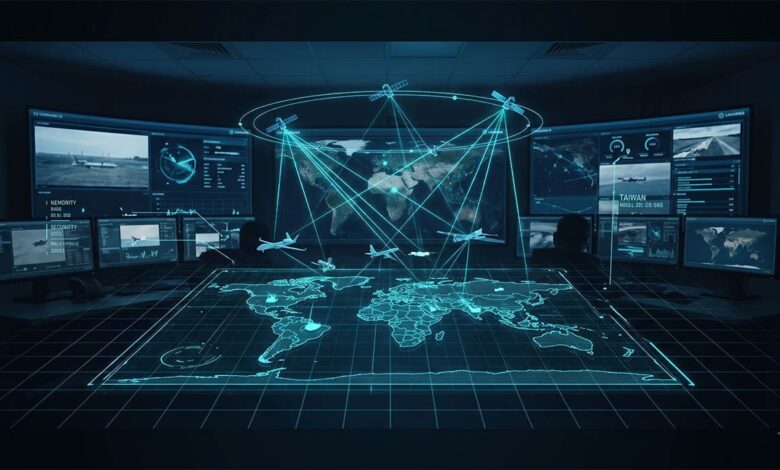
As tensions escalate with neighboring adversaries boasting significant military capabilities, smaller nations and regional coalitions are proactively enhancing their defense strategies. To counter complex threats to sovereignty, these entities are making vital investments in cutting-edge multi-domain technologies. Military forces operating across extensive geographies now require interoperable, secure networks to efficiently share intelligence, surveillance, and reconnaissance (ISR) data, ensure maritime domain awareness, and coordinate joint operations. This tech infrastructure must be resilient against electronic attacks and anti-access/area-denial measures to maintain connectivity among combined forces.
Recently, L3Harris Technologies collaborated with local industry partners in the Asia-Pacific region to exemplify how ready-now capabilities combined with artificial intelligence (AI) solutions can lead to technological superiority and operational advantages. The event, named “EVEREST™: Pacific Vigilance,” highlighted several innovative technologies designed to:
- Accelerate the planning, decision-making, and action cycle
- Connect sensors to shooters
- Bridge tactical edge operations with strategic capabilities
- Enhance the effectiveness of Joint All Domain Operations (JADO) by improving military force survivability and civil resilience
“Our EVEREST: Pacific Vigilance demonstration brings together numerous diverse technologies and systems into a cohesive network, offering persistent sensing, early detection, strategic and operational fires coordination, as well as ‘whole-of-society’ defense strategies and civil-military hybrid resilience,” remarked Kevin Steubing, Vice President of International Business Development at L3Harris.
During the demonstration, L3Harris’ software-defined, interoperable systems served as the crucial link for this architecture. The AI-enabled Maven Smart System, provided by Palantir, integrated intelligence and sensor data across tactical networks in real time, significantly expediting decision-making and minimizing timelines from target identification to elimination. Additionally, Amazon LEO’s commercial satellite internet and Link 16 tactical data links facilitated multi-domain, multi-path connectivity throughout the echelons.
Mission: Delivering Persistent Sensing and Early Detection
The scenario: The initial response to any threat against the homeland requires prompt threat identification. In the EVEREST: Pacific Vigilance demonstration, this task encompassed various sensors and ISR assets.

The technology utilized includes:
- A collaborative electronic warfare center conducts electromagnetic-spectrum signature analysis to identify potential threats.
- An airborne early warning and control system enhances ISR capabilities while providing real-time warnings against approaching objects.
- Counter-unmanned aerial system (C-UAS) solutions—featuring L3Harris’ VAMPIRE™, Drone Guardian™, and electro-optical/infrared sensor systems—work in unison with the network to detect swarming drone threats and facilitate kinetic counteractions.
- AI-enabled JADO command and control systems integrate efficiently with existing civil communication infrastructures.
Mission: Expediting Strategic and Operational Fires Coordination
The scenario: In response to a threat, tactical and operational resources coordinate effectively for long-range and coastal defense fire against larger platforms.
The technology incorporated includes:
- Champion Auto’s next-generation shelter for C5ISR extends networking capabilities between radios.
- A Tactical Operations Center – Light (TOC-L), supplied by Booz Allen, integrates into the C5ISR shelter, bridging Project 25 (P25) civil networks with tactical communications, thus enabling deployable edge-computing capabilities for enhanced military and civil coordination.
- Resilient waveforms such as L3Harris’ Wraith® MANET waveform provide anti-jam data and voice solutions, ensuring secure, interoperable communication that connects precision fires directed by RTX Sentry.
The Mission: Conceiving All-Out Defense Concepts
The scenario: Networked tactical operations—where brigade and battalion headquarters translate operational intent into maneuver tasks—facilitate seamless integration of ISR, Fires, and C-UAS at the tactical level.

The technology deployed includes:
- A Rayvatek eVTOL UAS illustrates the various unmanned platforms compatible with L3Harris embeddable radios.
- The Wraith Shield™ C-UAS software enhances the capabilities of software-defined radios for sense-and-protect operations, creating a digitized, AI-analyzable battlefield.
- Tactical-edge network systems offer a portable solution to interlink the C2 network from sensor to shooter, including intelligence and command systems.
The Mission: Fortifying Civil-Military Hybrid Resilience
The scenario: In smaller nations, coordinated responses by civil and military peacekeepers become critical when facing overwhelming forces threatening sovereign borders. Effective communication networks among civil, military, and reserve forces are essential to respond to asymmetric threats under established authorities and rules of engagement.
The technologies applied include:
- Dismounted forces equipped with night-vision systems operate in low-light conditions effectively.
- P25-enabled tactical communications streamline operations to defeat the enemy, capture prisoners of war, and coordinate care for injured or displaced personnel, while also linking with nearby civil, police, fire, and medical resources.
Looking Forward
“Our Everest: Pacific Vigilance event illustrates not only technical capabilities but also the innovation and partnerships necessary to provide ready, reliable, and scalable solutions today,” stated Jack Glasgow, Principal of Accounts Management at L3Harris. “In collaboration with our partners, we are poised to meet current operational demands while evolving the technology and concepts that will shape the security landscape of tomorrow. As digitization and AI reshape operational norms, traditional divisions between domains, networks, and sectors are converging, uniting all societal elements as stakeholders in the pursuit of a peaceful and open Pacific.”
Source: L3Harris (2026-11-11)