

Road to 95
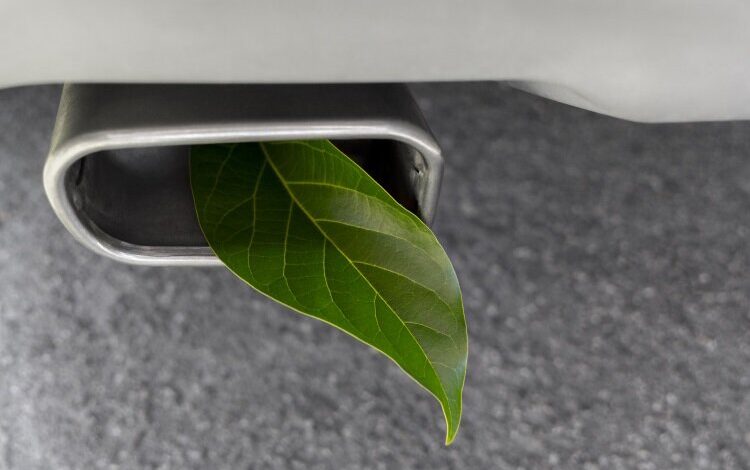
The European Union has mandated that from 2020, the fleet consumption for passenger vehicles must not exceed 95 grams of CO2 per kilometer, while vans are restricted to a maximum of 147 grams per kilometer. In response to these regulations, Rheinmetall’s development engineers have been diligently working under the ‘Road to 95’ initiative to create products aimed at reducing fuel consumption and emissions.
Meeting the stringent requirements set forth by the European Parliament involves more than a single product. Rheinmetall has showcased a range of components capable of achieving additional savings independently, with strategies aimed at minimizing friction and energy absorption.
The introduction of the ‘World Harmonized Light-Duty Vehicle Test Procedure’ (WLTP) in September 2017 has further complicated compliance efforts. This new testing protocol applies to both passenger cars and light commercial vehicles and aims to standardize assessments for CO2 and pollutant emissions across the globe.
Conditions of the WLTP Test Procedure
The WLTP is designed to mirror real-world driving conditions more accurately than the previous ‘New European Driving Cycle’ (NEDC). For instance, fuel consumption is now evaluated at higher speeds of up to 130 kilometers per hour and at an ambient temperature of 23 degrees Celsius, as opposed to 30 degrees. These adjustments impose heightened demands on vehicle developers.
The Rheinmetall Mission: Road to 95
For established internal combustion engine technologies, Rheinmetall has developed various products that enhance both mechanical and thermodynamic efficiencies,” stated Dipl.-Ing. Heinrich Dismon, Head of Research and Technology at Rheinmetall Automotive. “We focus on diverse systems for exhaust gas recirculation, which were initially designed to reduce nitrogen oxides in diesel engines but have gained traction in gasoline engines as well to lower both fuel consumption and CO2 emissions. These systems are utilized in both high and low-pressure applications, often complemented by advanced cooling techniques for exhaust gases.”
Additionally, innovations such as friction-optimized coated pistons, specialized bearings, and valves designed for turbocharger control all contribute significantly to the reduction of CO2 emissions.
Maximizing Emission Saving Potential through Downsizing
A common approach to achieving emissions reductions is engine downsizing, which combines smaller engine displacement with supercharging to improve fuel efficiency. However, this method increases the demands placed on vehicle components and auxiliary systems.
Mega Trend: Demand-Oriented Systems
Substantial savings can also be realized through demand-oriented systems that activate only when necessary, such as controllable and adjustable pumps for cooling, oil circulation, and vacuum supply for braking systems. Another trend is the variable control of the valve train, which not only leads to significant fuel economies but also allows the system to deactivate entire cylinders during less demanding driving scenarios, such as in stop-and-go traffic. This functionality is integrated into Rheinmetall’s UpValve control system.
Reduced Consumption and CO2 Reduction: Rheinmetall Products
Rheinmetall’s extensive range of products is aimed at lowering vehicle fuel consumption, thereby contributing to reduced CO2 emissions. For an in-depth look at their offerings, further information can be found here.