


German MOD Pistorius charts course for 4th fleet intelligence vessel
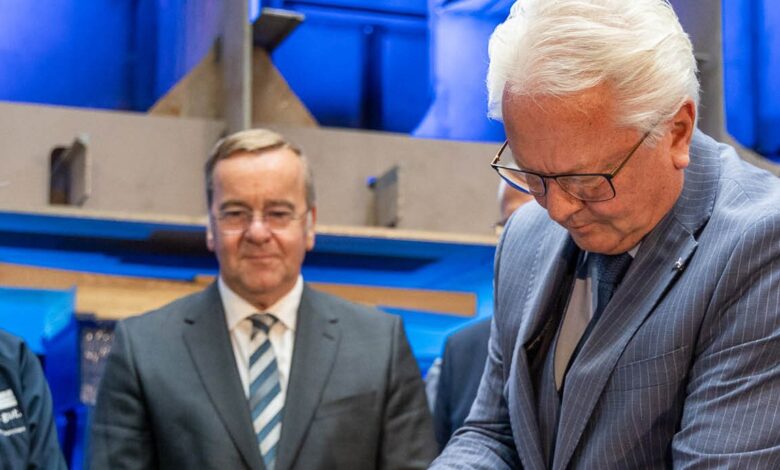
The keel-laying ceremony for the third fleet intelligence vessel was held at Rheinmetall’s shipyard in Wolgast, attended by Federal Minister of Defence Boris Pistorius, Minister President Manuela Schwesig, and Rheinmetall CEO Armin Papperger, along with high-ranking representatives of the Bundeswehr and various guests from industry and politics. This significant event occurred several months ahead of schedule, coinciding with the construction of the second fleet intelligence vessel at the same facility.
During the ceremony, Boris Pistorius emphasized the enhanced capabilities of the new Class 424 fleet intelligence vessels, highlighting their advanced sensor technology designed for efficient monitoring across land, air, and sea, thereby improving intelligence gathering. The vessels are set to enter service gradually starting in 2029, ensuring sustained operational capabilities for the German Navy and Cyber and Information Domain Service collaboration. Pistorius noted the strategic requirement for a total of four fleet intelligence vessels, with three currently under construction. He announced plans to advance the parliamentary vote for the procurement of a fourth vessel, developed in close consultation with naval leadership.
Manuela Schwesig remarked on the significance of the Peene-Werft shipyard for the local and regional maritime industry, celebrating the keel-laying of the third fleet intelligence vessel as a proud achievement for the community.
The keel-laying ceremony, which symbolizes the commencement of shipbuilding, featured traditional highlights such as the placement of lucky coins and other commemorative activities. Notable attendees included Minister of State Philipp Amthor, Vice Admiral Axel Deertz, Vice Chief of the German Navy, Vice Admiral Thomas Daum, Chief of the German Cyber and Information Domain Service, Angela Bier, and Jürgen Giefer from the Federal Office of Equipment.
Armin Papperger commended the successful keel-laying, emphasizing the strength of collaboration, planning, and technological expertise within the Rheinmetall team. He recognized the achievement as a key milestone that lays the groundwork for subsequent construction phases and expressed gratitude to all who contributed their dedication and skill.
Measuring approximately 130 meters in length, the fleet intelligence vessels are equipped with state-of-the-art sensor technology and will function as critical reconnaissance platforms for maritime intelligence gathering. Following outfitting, commissioning, and testing, the vessels are scheduled to be towed to Rheinmetall’s Blohm+Voss shipyard in Hamburg.