


GMF 140 Frigate for Modern Naval Operations
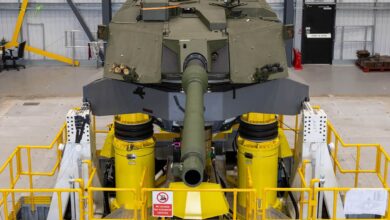
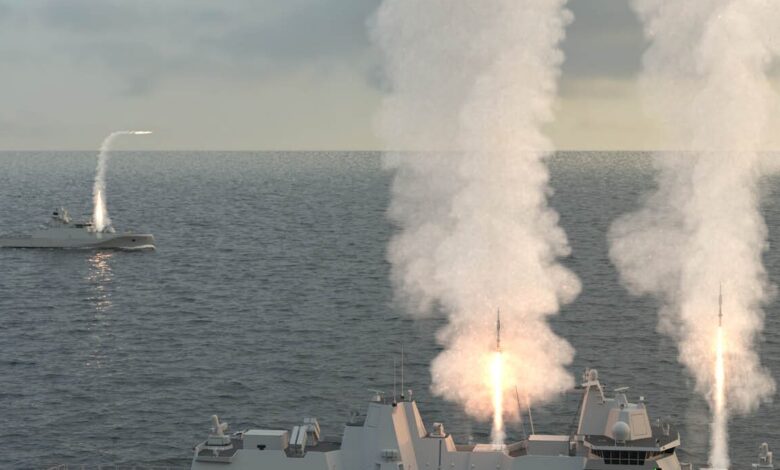
Rheinmetall has officially introduced the GMF 140, a cutting-edge 140-metre, 6,000+ tonne guided missile frigate meticulously crafted to excel in the diverse range of contemporary naval warfare scenarios. Tailored to align with the evolving demands of NATO and allied navies, the GMF 140 sets a new high standard for survivability, lethality, and mission adaptability in the competitive global frigate landscape. Rheinmetall aims to target international markets, with plans to position the GMF 140 as a key contender in a procurement initiative in North America.
Engineered for action in notably challenging threat environments, the GMF 140 integrates advanced air and ballistic missile defense, anti-submarine warfare, and long-range strike capabilities into a highly survivable, digitally integrated and minimally crewed platform. The design boasts optimization for blue-water operations while remaining versatile enough to support expeditionary, littoral, and coalition missions.
The frigate is configured to incorporate US-sourced primary radar systems, delivering exceptional performance in detection, tracking, and engagement against conventional air threats, hypersonic weapons, and ballistic missiles. It features the AEGIS Combat System alongside 64 Strike-Length Vertical Launch System (VLS) cells, allowing it to deploy a full spectrum of modern air defense, ballistic missile defense, and land-attack missiles. Such capabilities afford a level of operational awareness and fire control that is generally found on significantly larger surface combatants. Additionally, the GMF 140 can be equipped with various combat management systems, including the Lockheed Martin CMS330, which provides a proven operational performance through an interoperable and scalable fleet-wide combat management ecosystem, supporting the integration of European sensors and weapon systems.
Designed as a genuine multi-domain combatant from the ground up, the GMF 140 integrates sophisticated anti-submarine warfare capabilities with a low-signature hull, advanced acoustic management, and a combination of hull-mounted and towed sonar systems, alongside support for embarked maritime helicopters and unmanned systems from both the US and Europe.
The development of the GMF 140 specifically addresses the needs of NATO and allied navies in search of a highly capable, cost-effective, and interoperable next-generation surface combatant. Its design is particularly well-suited for nations updating their fleets in response to increasingly complex security challenges faced across Europe, the North Atlantic, and the Indo-Pacific regions.
This integration of air and missile defense, ballistic missile defense, anti-submarine warfare, and long-range strike capabilities positions the GMF 140 as one of the most sophisticated and potent frigates currently available in its class.
Rheinmetall is keen to introduce the GMF 140 within a campaign in North America, with prospects of extending offerings to other allied navies seeking a highly interoperable naval combatant that can seamlessly operate alongside leading maritime forces worldwide.
About GMF 140
- Length: 140 metres
- Displacement: Approximately 6,000 tonnes
- Primary Missions: Anti-Air Warfare (AAW), Ballistic Missile Defence (BMD), Anti-Submarine Warfare (ASW), Long-Range Strike
- Combat System: AEGIS augmented with CMS330 as appropriate
- Primary Radar: US sourced air defence radar, in various optional configurations including full BMD tracking capability
- Vertical Launch System: 64 Strike-Length VLS cells
- Other Weapons and Sensors: Anti-ship missile, torpedo launcher, 5″ main gun, laser, secondary armament, CIWS, EO, EW, towed and hull mounted sonar and decoy systems fully supported
- Missile Compatibility: Full range of air defence, ballistic missile defence and land-attack missiles
- Design Philosophy: Open architecture, future growth, NATO interoperability and high survivability