

Northrop Grumman to Accelerate Extended-Range C-UAS Missile Technology for US Army
ROCKET CENTER, W.Va. – Sept. 29, 2026 – Northrop Grumman (NYSE: NOC) has announced plans to develop next-generation air-breathing propulsion for the U.S. Army as part of a contract valued at $18.8 million. This initiative aims to enhance the range and air defense capabilities of the Army’s eXtended Range Counter-Unmanned Aircraft System (XRC) to better address the evolving challenges of unmanned aerial systems.
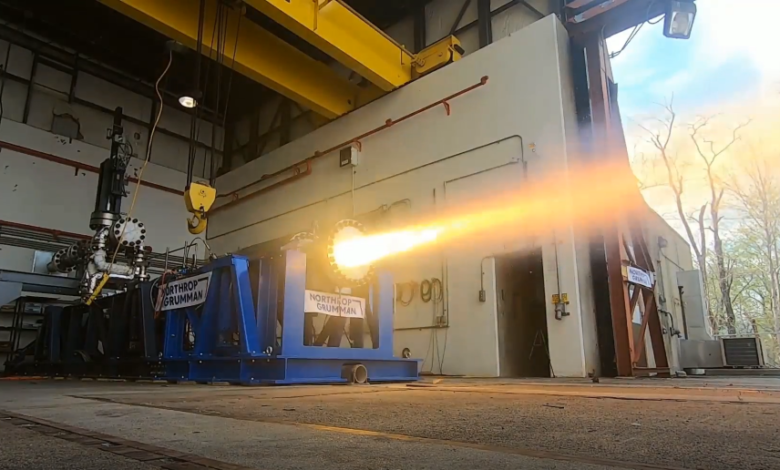
As a leader in air-breathing tactical propulsion, Northrop Grumman will produce solid fuel ramjet propulsion technology for integration into XRC missile prototypes under this contract with the U.S. Army Combat Capabilities Development Command Aviation & Missile Center. Unlike traditional solid rocket motors, which rely on a chemical oxidizer, solid fuel ramjets utilize atmospheric oxygen, thereby maximizing internal space for fuel. This innovative propulsion design results in a more efficient system that allows for greater range and energy, making it capable of engaging adaptable aerial threats from safer distances.
The development process will incorporate a comprehensive ground and flight test campaign to validate design and production methodologies. The ultimate goal is to create a cost-effective manufacturing process that can meet urgent defense requirements swiftly.
Erik Buice, vice president of missile products at Northrop Grumman, emphasized the importance of this development by stating, “The rapid evolution of unmanned aerial threats demands innovative solutions. By aligning the Army’s vision for next-generation air defense with our advanced propulsion expertise, we’re delivering capability that engages targets farther away, protects mobile forces, and strengthens layered defense against emerging aerial threats.”
Development for the XRC program will take place at the Allegany Ballistics Laboratory in West Virginia, a facility specializing in advanced propulsion systems and energetics operated by Northrop Grumman.
The XRC program aims to enhance the performance of the Army’s Maneuver Short Range Air Defense (M-SHORAD) system, which is designed to safeguard maneuvering forces from low-altitude aerial threats. Its compatibility with the Stinger Vehicle Universal Launcher further bolsters defense capabilities against both unmanned aerial systems and traditional aircraft.
With adversaries increasingly utilizing sophisticated unmanned systems, the extended-range capabilities of the XRC program are critical to the Army’s layered air defense strategy. Northrop Grumman is also deeply engaged in the Army’s broader counter-UAS ecosystem, providing essential command-and-control networks, kinetic options, and propulsion expertise for advanced interceptor systems.
As a prime contractor for the Forward Area Air Defense Command and Control (FAAD C2) system, which is the Army’s official short-range air defense program of record, Northrop Grumman plays a pivotal role in enhancing U.S. Army air defense capabilities. Furthermore, the company’s AiON command system enhances tactical responses by managing multiple sensors and engaging drone swarms.
Additionally, Northrop Grumman is advancing the Raid Hunter™, a 50mm Gun-Based Air Defense system designed for high engagement capacity to counter mass and mixed air raids, providing vital protection for maneuver forces and critical infrastructure within a layered CUAS defense framework.
Northrop Grumman remains dedicated to pioneering advanced technologies that ensure the safety of warfighters and maintain mission success through scalable, integrated defense solutions.
Source: Northrop Grumman (2026-09-29T14:02:00Z)