

Critical capability: How venture-backed innovation is making faster factories
Fabri: Reinventing Casting with AI and 3D Printing
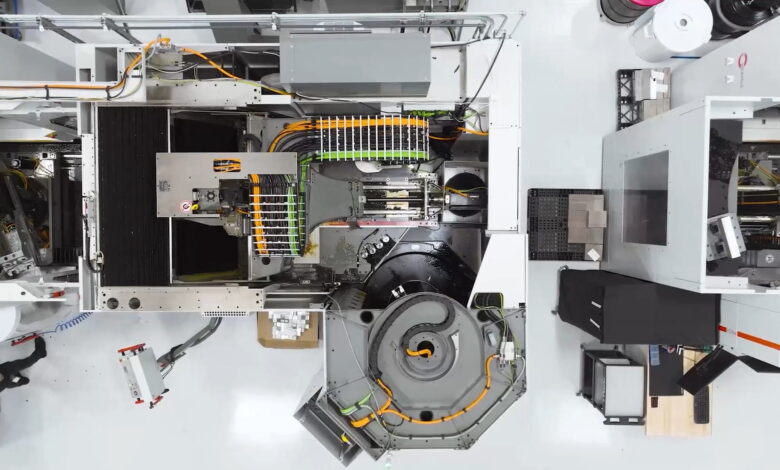
Located north of Boston, Fabri’s foundry resembles a laboratory more than a traditional manufacturing facility. Gone are the days of roaring furnaces and smoky haze; instead, the sound of 3D printers fills a clean, compact space.
Fabri has automated the centuries-old investment casting process, which traditionally involves dipping wax molds in ceramic to create shells that are subsequently filled with molten metal. This method is crucial for the production of numerous critical components; however, it is often plagued by slow production cycles and labor-intensive processes, leading to yearslong backlogs at many conventional foundries.
By leveraging automated tools and 3D-printed molds, Fabri has dramatically reduced production times from months to mere days.
“In the industry today, we’re seeing lead times between one and three years,” said Steven Davis, Fabri’s founder and CEO. “We’ve shipped parts in as fast as one week.”
Fabri further accelerates development through the use of AI-driven software that automates the most time-consuming aspects of production. This technology enables the simulation of hundreds of design options in parallel, allowing the best designs to enter production on the same day while utilizing predictive models to minimize the rework that is prevalent in traditional foundries.
This innovative approach affords Fabri a level of flexibility uncommon in the industry. Unlike many foundries that specialize in specific parts or require large orders, Fabri can efficiently produce a single urgent replacement part. This capability could be particularly advantageous in swiftly addressing the needs of grounded aircraft or swiftly switching to produce entirely different products.
“The foundry that’s making turbine blades one day might be making missile fins the next day,” Davis commented.
Founded in 2025, Fabri has quickly aligned with RTX’s three divisions—Collins Aerospace, Pratt & Whitney, and Raytheon—to provide castings for various products. Looking ahead, the company intends to expand its capacity by establishing a new foundry each year.
Source: RTX (Raytheon) (2026-06-30 20:10:00)